Leaving a Dachshund Puppy Alone: Building Up Time Gradually
Leaving a Dachshund puppy alone can be a challenging task, especially when you’re concerned about their comfort and potential anxiety. It’s essential to approach this situation with care and patience. By gradually increasing the time your puppy spends alone, you can help them feel more secure and confident. But how do you start this process effectively? Understanding their needs and behaviors is key, and there are several strategies you can employ to ease the change.
The Essentials
- Start with brief separations of five to ten minutes to help your Dachshund puppy adjust gradually.
- Use toys or treats during absences to create positive associations with being alone.
- Gradually increase separation duration as your puppy becomes more comfortable with solitude.
- Maintain calm energy during goodbyes and reunions to minimize anxiety.
- Establishing a consistent routine helps your puppy feel secure when left alone.
Understanding Separation Anxiety in Dachshund Puppies
When you bring a Dachshund puppy into your home, it’s important to understand that they can be prone to separation anxiety. These little guys thrive on companionship and can struggle when left alone. Their affectionate nature makes them enthusiastic to bond, and when you’re gone, they might feel anxious or scared. Signs can include barking, destructive behavior, or even accidents indoors. It’s essential to recognize these signs early, as they show how deeply your puppy values your presence. By addressing their anxiety, you’ll help create a more secure and happy environment for your furry friend, fostering a lasting bond between you two. Providing delicious treats can also help distract and comfort your Dachshund puppy during your absences.
Preparing Your Puppy for Alone Time
As you prepare your Dachshund puppy for moments of solitude, it’s important to take gradual steps to ease their change. Start by leaving your puppy alone for short periods, gradually increasing the time as they adapt. Create a positive association with your departure by providing a favorite toy or treat. Practice leaving the room for brief moments, so they learn you’ll return. Always stay calm and upbeat during goodbyes and reunions, as your energy affects their emotions. Consistency is key; establish a routine that helps your puppy feel secure and confident when you’re not around. Consider investing in a cozy dog bed, as a comfortable sleeping space can significantly enhance their sense of security when alone.
Creating a Safe and Comfortable Environment
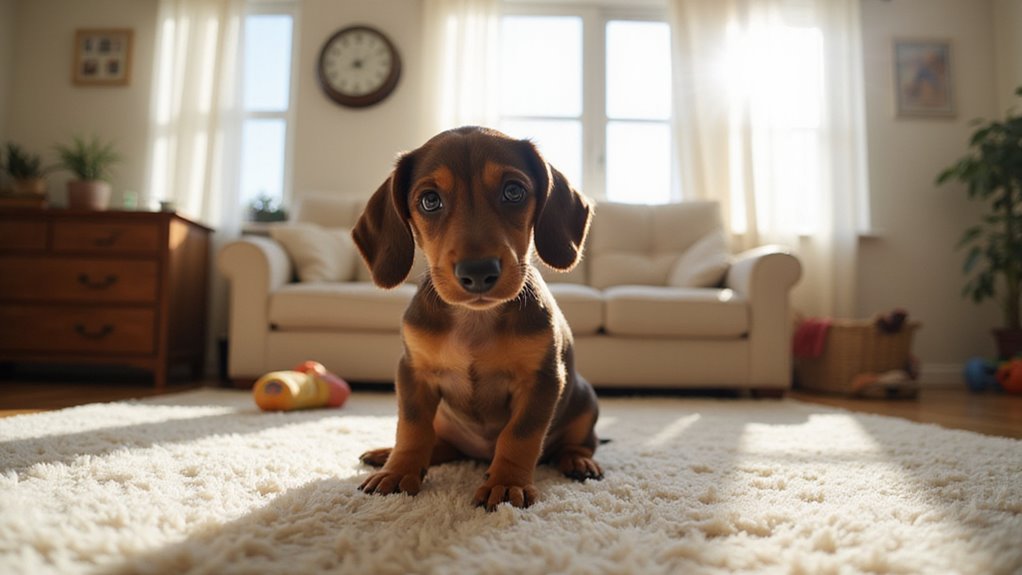
Creating a safe and comfortable environment for your Dachshund puppy is essential for their well-being during alone time. Start by puppy-proofing your space; remove hazards like electrical cords and toxic plants. Provide a cozy bed in a quiet area to help them feel secure. Use baby gates to restrict access to unsafe zones. Consider a crate, as it can offer a safe haven. Keep their favorite toys nearby to keep them entertained. A warm blanket or an item with your scent can provide comfort. Finally, make sure they have access to water to stay hydrated while you’re away. Additionally, choosing the right dog bed for your Dachshund can greatly enhance their comfort during alone time.
Starting With Short Periods
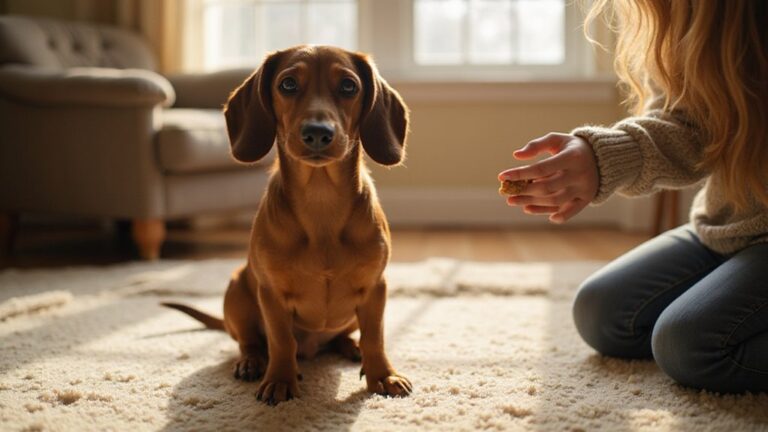
To help your Dachshund puppy adjust to being alone, it’s best to start with short periods of separation. Begin by leaving your puppy in a safe space for just five to ten minutes. This brief time will help them understand that you’ll return. Make certain to distract them with toys or treats, so they associate your absence with positive experiences. Gradually, as your puppy becomes more comfortable, you can extend these initial separations. Remember, the goal is to guarantee your puppy feels secure and doesn’t experience anxiety when you leave, setting a solid foundation for longer periods apart later. Using the right brush for your Dachshund can also help with their comfort during grooming, making them feel more relaxed when you are away.
Gradually Increasing Alone Time
Once your Dachshund puppy has adjusted to short separations, it’s time to gradually increase the alone time. Start by extending the duration in small increments, like 5 or 10 minutes. Pay attention to how your puppy reacts; if they seem anxious, scale back and give them more time to adjust. Aim to create a consistent schedule, allowing your puppy to anticipate when you’ll be gone and when you’ll return. This routine helps build their confidence and comfort with being alone. Additionally, providing essential dog steps can assist your puppy in feeling secure during your absence. Remember, the goal is to make these changes smooth, so be patient and supportive throughout the process.
Positive Reinforcement Techniques
While you’re helping your Dachshund puppy adjust to being alone, positive reinforcement techniques can play an essential role in easing their anxiety. Reward your puppy with treats, praise, or playtime immediately after they exhibit calm behavior when you leave. This builds a positive association with your absence. Start with short departures, and when they handle it well, gradually extend the time. If they show signs of distress, don’t punish them; instead, reassure them with a gentle tone and return when they’re calm. Consistently reinforcing good behavior creates a sense of security for your puppy, making alone time easier for both of you. Additionally, providing your puppy with engaging toys can help keep them occupied during your absence.
Monitoring and Adjusting the Routine
Monitoring your Dachshund puppy’s progress is key to ensuring they adjust well to being alone. Pay attention to their behavior during and after your absences. If they seem anxious or destructive, it might be time to shorten the alone time or increase your pre-departure routine. Adjust your schedule based on their comfort level, gradually increasing the duration as they become more confident. Keep a journal to track changes and note any triggers that cause stress. This way, you can create a routine that best suits your puppy’s needs, promoting a happier, more secure environment when you’re not home. Consider providing them with Dachshund-friendly toys to help keep them engaged and reduce anxiety during your absences.
Frequently Asked Questions
How Long Can Dachshund Puppies Hold Their Bladders?
Dachshund puppies can typically hold their bladders for about one hour for each month of age. So, a three-month-old can usually wait around three hours. However, every puppy’s needs may vary slightly.
What Toys Are Best for Keeping Puppies Occupied?
Interactive toys, like puzzle feeders and chew toys, are great for keeping your puppy occupied. They stimulate your pup’s mind and help alleviate boredom, making sure they stay entertained while you’re busy or away.
Can I Leave My Puppy Alone Overnight?
You shouldn’t leave your puppy alone overnight just yet. They need companionship and reassurance. Start with short absences and gradually increase the time you’re away, ensuring they feel secure and comfortable when you’re gone.
What Signs Indicate My Puppy Is Stressed Alone?
If your puppy’s stressed alone, look for excessive barking, whining, destructive behavior, or attempts to escape. They might also pant, drool, or have accidents indoors. Observing these signs can help you gauge their comfort level.
Are There Specific Breeds More Prone to Separation Anxiety?
Yes, certain breeds, like Dachshunds, Labrador Retrievers, and Border Collies, tend to be more prone to separation anxiety. If you’ve got one of these breeds, it’s crucial to monitor their behavior when left alone.