Lead Pulling Problems: Loose-Lead Walking for Dachshunds
If you’ve ever walked a Dachshund, you know how their strong instincts can turn a simple stroll into a tug-of-war. Their curiosity and prey drive often lead to enthusiastic pulling on the lead. Understanding this behavior is essential for creating a more enjoyable walking experience. But how do you effectively teach your Dachshund to walk calmly beside you? The answer lies in a few key training techniques and the right equipment. Let’s explore this further.
The Essentials
- Understand your Dachshund’s strong prey drive and curiosity, which can lead to pulling during walks.
- Implement training techniques, such as rewarding good behavior and using a cue word, to encourage loose-lead walking.
- Stop walking immediately when your Dachshund pulls to reinforce the importance of staying by your side.
- Use a comfortable, secure harness that distributes pressure evenly to prevent strain during walks.
- Regular short training sessions and celebrating small victories will improve loose-lead walking skills over time.
Understanding the Dachshund’s Nature and Instincts
When you understand a Dachshund’s nature and instincts, you’ll see why they can be so stubborn on a leash. These little pups were bred for hunting, giving them a strong prey drive and a fierce independence. They’re curious explorers, often more focused on sniffing out their environment than following your lead. Their elongated bodies and short legs contribute to a unique gait, making them less inclined to walk alongside you. This instinctual behavior can lead to pulling and tugging, as they’re driven by both curiosity and determination. Recognizing these traits is key to addressing their lead pulling challenges effectively. Providing delicious treats during training can also motivate them to walk calmly by your side.
Common Causes of Lead Pulling in Dachshunds
Despite their small size, Dachshunds can exhibit powerful pulling on the leash, and several factors contribute to this behavior. One common cause is their strong prey drive; they may spot a squirrel or bird and instinctively want to chase it. Additionally, excitement about new smells or sights can lead to enthusiastic pulling. Lack of proper training or inconsistent commands can also cause your Dachshund to pull, as they might not understand what’s expected. Finally, they may simply be keen to explore their environment, leading to a tug-of-war between their curiosity and your attempts to keep the leash loose. Using a best dog backpack can help in managing their energy levels during walks.
The Importance of Loose-Lead Walking
While it may seem harmless for your Dachshund to pull on the leash, practicing loose-lead walking is essential for both their safety and your comfort. When your pup pulls, they can easily become distracted or get into dangerous situations, like darting into traffic or confronting other dogs. Additionally, constant pulling can strain their neck and back, leading to long-term health issues. Loose-lead walking allows you to maintain better control, making walks more enjoyable for both of you. By teaching your Dachshund this skill, you’re not just enhancing your bond but also ensuring safer, more pleasant outings together. Choosing the perfect collar for your Dachshund can further aid in training them to walk without pulling.
Training Techniques for Loose-Lead Walking
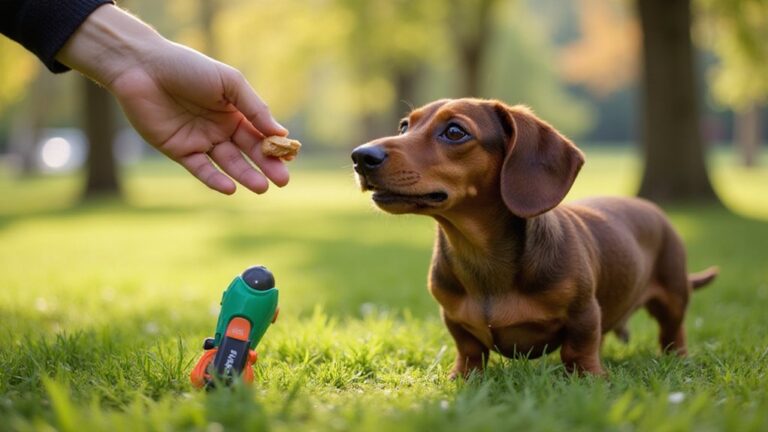
To successfully teach your Dachshund loose-lead walking, it’s essential to use consistent training techniques that reinforce positive behavior. Start by rewarding your pup with treats or praise when they walk beside you without pulling. Use a cue word, like “let’s go,” to signal when it’s time to walk. If your Dachshund begins to pull, stop walking immediately and wait for them to return to your side. Practice this regularly, keeping sessions short but frequent. Remember to be patient and stay positive; training takes time. Celebrate small victories, and soon your Dachshund will be walking calmly by your side! Additionally, using the right brush for your Dachshund can help keep their coat healthy, which is important for overall well-being and good grooming practices.
Choosing the Right Equipment for Your Dachshund
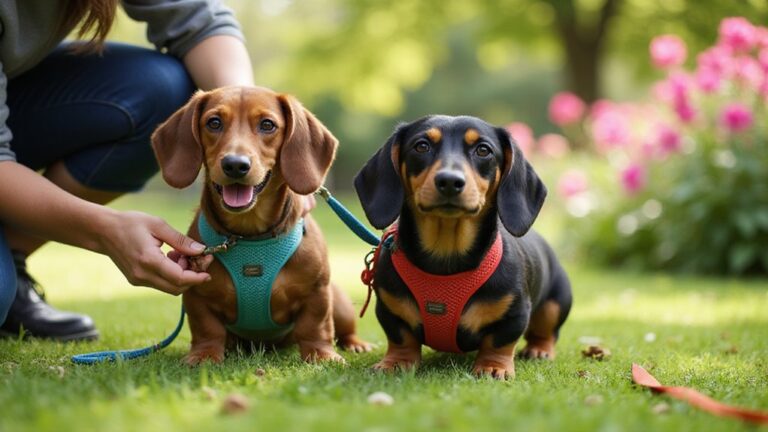
When it comes to choosing the right equipment for your Dachshund, selecting a comfortable and secure harness is essential, especially since their unique body shape can make traditional collars less effective. Look for a harness that distributes pressure evenly across their chest and back to prevent strain. Adjustable straps can help achieve a snug fit, reducing the chance of escape during walks. Consider a lightweight design that won’t restrict movement. Additionally, a good leash, preferably with a padded handle, will provide you more control and comfort while walking. These choices can make all the difference in your walking experience. Furthermore, the best collar for dachshund can also complement your training efforts and ensure a safer outing.
Building Consistency and Patience in Training
Building consistency and patience in training your Dachshund is essential for fostering good behavior and a strong bond. Set clear rules and stick to them; dogs thrive on routine. Use the same commands and gestures each time to avoid confusion. Be patient—Dachshunds can be stubborn, and progress may be slow. Celebrate small victories, and don’t get frustrated if they don’t catch on immediately. Consistent practice, even in short sessions, will reinforce learning. Remember, it’s not just about teaching obedience; it’s about building trust. With time, your Dachshund will respond better, making your training journey enjoyable for both of you. Additionally, incorporating essential dog steps can greatly assist your Dachshund in navigating their environment.
Enjoying Stress-Free Walks With Your Dachshund
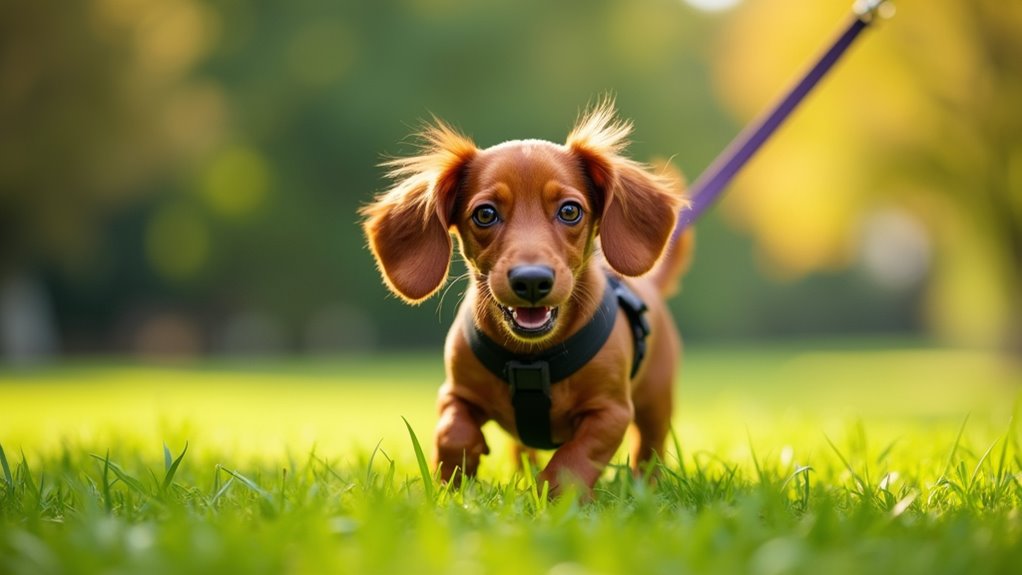
Although walks can be a joyful experience for both you and your Dachshund, they can quickly turn stressful if your pup pulls on the leash. To enjoy stress-free walks, start by using a well-fitting harness and a short leash. Practice loose-lead walking techniques, rewarding your Dachshund for staying by your side. Keep your pace slow and consistent, allowing your pup to explore and sniff without yanking. If they pull, stop and wait for them to return to your side before continuing. With patience and positive reinforcement, you’ll transform walks into a delightful bonding experience for both of you. Additionally, using the right dog steps can help your Dachshund feel more confident and secure during your outdoor adventures.
Frequently Asked Questions
Can Lead Pulling Lead to Physical Injuries in My Dachshund?
Yes, lead pulling can lead to physical injuries in your dachshund. It might cause strain on their neck, spine, or joints, resulting in pain or long-term issues. Training for loose-lead walking can help prevent these problems.
How Long Does It Take to Train a Dachshund for Loose-Lead Walking?
Training your dachshund for loose-lead walking can take anywhere from a few weeks to several months, depending on consistency, patience, and your dog’s temperament. Regular practice and positive reinforcement are key to success.
Are There Specific Breeds That Are More Prone to Lead Pulling?
Yes, certain breeds like Beagles, Boxers, and Terriers tend to be more prone to lead pulling due to their high energy and curiosity. You might find it especially challenging with these breeds during walks.
What Should I Do if My Dachshund Refuses to Walk on a Leash?
If your dachshund refuses to walk on a leash, try enticing them with treats or toys. Start in a familiar area, and gradually increase the distance as they become more comfortable with the leash.
Can I Use Treats to Reinforce Good Leash Behavior During Walks?
Absolutely, you can use treats to reinforce good leash behavior! Rewarding your dachshund when they walk calmly encourages them to repeat that behavior. Just be consistent and patient, and soon they’ll associate walking nicely with treats.