Fearful Dachshunds: Helping Nervous Dogs Gain Confidence
If you have a fearful Dachshund, you know how challenging it can be to help them feel secure. Understanding what drives their anxiety is essential in supporting their journey to confidence. With the right approach, you can create a nurturing environment that encourages growth. But what specific strategies can truly make a difference in their behavior? Let’s explore effective techniques that can transform your anxious companion into a more self-assured dog.
The Essentials
- Identify and address root causes of fearfulness, such as genetics or negative experiences during socialization.
- Create a safe space with familiar items to help your Dachshund feel secure during anxious moments.
- Gradually expose your pup to new experiences and environments to build confidence in a controlled manner.
- Use positive reinforcement techniques to reward brave behaviors and associate new situations with positive outcomes.
- Monitor your dog’s body language and provide breaks during socialization to prevent overwhelming them.
Understanding the Root Causes of Fearfulness in Dachshunds
When you think about why your Dachshund might be fearful, it’s important to contemplate both genetics and early experiences. Dachshunds can inherit traits that predispose them to anxiety, making them more sensitive in various situations. Additionally, if your pup had negative encounters during their critical socialization period, it could lead to lasting fearfulness. Lack of exposure to different environments, people, or other pets might also contribute to their nervousness. Recognizing these root causes can help you understand your dog’s behavior better and guide you in creating a supportive environment that fosters confidence and security for your furry friend. Providing perfect presents for Dachshund lovers can also help create positive associations and boost their confidence.
Common Triggers for Fearful Behavior
While understanding your Dachshund’s fearfulness is essential, identifying common triggers can greatly aid in addressing their anxiety. Loud noises, like thunderstorms or fireworks, often scare them. Sudden movements or unfamiliar people can also provoke fear. Certain environments, such as crowded places or busy streets, may overwhelm your pup. Additionally, specific objects, like vacuum cleaners or umbrellas, can cause distress. Keep an eye on their body language; signs of fear can include tail tucking, shaking, or cowering. By recognizing these triggers, you can take steps to help your Dachshund feel more secure and confident in their surroundings. Providing Dachshund-friendly toys can also help distract them and build their confidence in these situations.
Building a Safe and Comfortable Environment
Creating a safe and comfortable environment for your nervous Dachshund is key to helping them overcome their fears. Start by designating a quiet space where they can retreat when feeling anxious. Use soft bedding and familiar toys to make the area inviting. Keep the surroundings calm by minimizing loud noises and sudden movements. Establish a consistent routine to provide structure and predictability, which can ease their anxiety. Consider using calming aids like pheromone diffusers or soothing music. By prioritizing their comfort, you’ll help build their confidence and create a foundation for further training and socialization. Additionally, selecting the right dog beds for Dachshunds can significantly enhance their sense of security and relaxation.
Socialization Techniques for Fearful Dachshunds
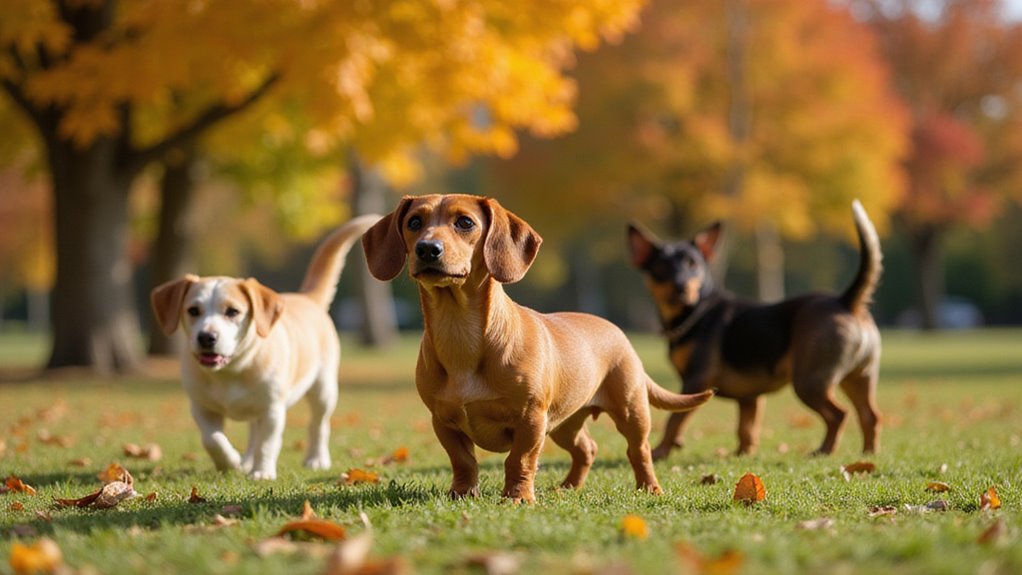
Although socialization can be challenging for fearful Dachshunds, it’s essential for their development and confidence. Start by exposing your pup to new experiences in a controlled manner. Take short walks in less crowded areas, gradually introducing them to different sights, sounds, and smells. Arrange playdates with calm, friendly dogs to encourage positive interactions. You can also visit pet-friendly stores, allowing your Dachshund to observe people and other animals from a safe distance. Remember to monitor their body language and provide breaks when needed. Patience is key—over time, your pup will become more comfortable in various social situations. Incorporating interactive toys can also help boost their confidence during playtime.
Positive Reinforcement Training Methods
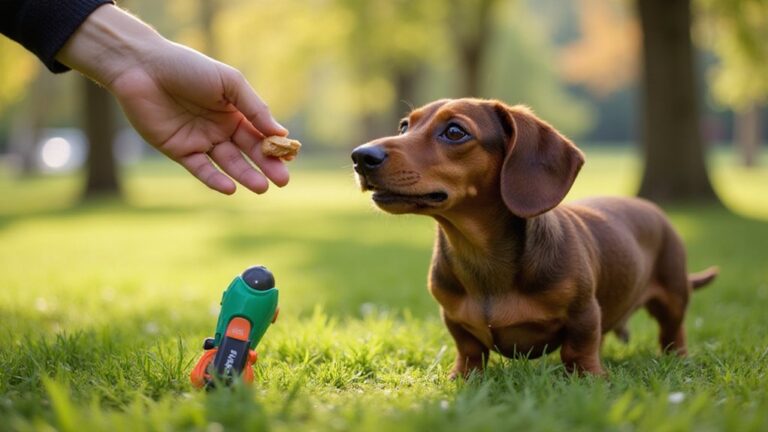
When you use positive reinforcement training methods, you can considerably boost your Dachshund’s confidence and help them feel more secure in their environment. Focus on rewarding desired behaviors with treats, praise, or playtime. For example, when your Dachshund approaches a new person or object, immediately offer a treat and a cheerful “good dog!” This encourages them to repeat the behavior. Consistency is key; always reward the same behaviors to reinforce learning. As your dog begins to associate new experiences with positive outcomes, they’ll gradually feel more at ease and willing to explore their surroundings, fostering their overall confidence. Incorporating delicious treats into your training sessions can further motivate your Dachshund and make the experience enjoyable.
Desensitization and Counter-Conditioning Strategies
To help your nervous Dachshund gain confidence, desensitization and counter-conditioning strategies can be incredibly effective. Start by exposing your pup to the things that trigger their fear in a controlled manner. Keep these exposures brief and at a low intensity. Pair these moments with positive experiences, like treats or playtime, to create a positive association. Gradually increase the intensity and duration as your Dachshund becomes more comfortable. Remember, patience is key—don’t rush the process. Celebrate small victories, and stay consistent with your approach. Over time, your Dachshund will learn to feel more secure and confident in their environment. Additionally, providing a comfortable and supportive dog bed can further enhance your Dachshund’s sense of safety and relaxation.
When to Seek Professional Help
Recognizing when it’s time to seek professional help can be essential for your nervous Dachshund’s progress. If your dog’s fear escalates despite your efforts, or if they exhibit aggressive behaviors, it’s vital to consult a trainer or behaviorist. Additionally, if your pup struggles with everyday situations, like meeting new people or encountering other dogs, professional guidance can provide tailored strategies. Don’t hesitate if you’re feeling overwhelmed or unsure about your training methods; seeking help can lead to better outcomes. Remember, early intervention can make a significant difference in your Dachshund’s confidence and overall well-being. Providing delicious treats can also help create positive associations during training sessions.
Frequently Asked Questions
Can Genetics Influence a Dachshund’s Fearfulness?
Yes, genetics can influence a dachshund’s fearfulness. If their parents exhibited anxiety or nervous behaviors, you might see similar traits in your dog. It’s crucial to reflect on their lineage when evaluating their temperament.
How Long Does It Take for a Fearful Dachshund to Gain Confidence?
It can take weeks to months for a fearful dachshund to gain confidence. With patience, consistent training, and positive reinforcement, you’ll help your pup gradually overcome their fears and build trust in their environment.
Are Some Dachshund Breeds More Prone to Fearfulness?
Yes, some Dachshund breeds can be more prone to fearfulness, particularly those with less socialization or exposure to different environments. You’ll want to pay attention to individual temperaments and provide supportive training.
What Are Common Signs of Anxiety in Dachshunds?
Common signs of anxiety in dachshunds include excessive barking, trembling, hiding, digging, and pacing. You might also notice your dog avoiding eye contact or being unusually clingy. It’s essential to recognize these behaviors early.
Can Medications Help Fearful Dachshunds?
Yes, medications can help fearful dachshunds. They might reduce anxiety symptoms, making it easier for your dog to cope with stress. Always consult your vet to find the best option tailored for your pup’s needs.