Grooming a Nervous Dachshund: Making It Less Stressful
Grooming a nervous Dachshund can feel intimidating, but it doesn’t have to be a stressful ordeal for either of you. By understanding your dog’s anxiety and creating a calm environment, you can make the process smoother. Using the right tools and techniques can also make a significant difference. Curious about how to implement these strategies effectively? Let’s explore some practical tips that can help transform grooming into a more positive experience.
The Essentials
- Create a calm grooming environment with soft lighting, soothing music, and familiar surroundings to reduce anxiety.
- Use gentle grooming tools like slicker brushes and quality nail clippers to avoid discomfort.
- Gradually desensitize your Dachshund to grooming by introducing tools and rewarding calm behavior.
- Keep grooming sessions short initially and gradually increase their duration as your dog becomes more comfortable.
- Employ positive reinforcement with treats and praise to create a positive association with grooming experiences.
Understanding Your Dachshund’s Anxiety
Understanding your Dachshund’s anxiety is vital for creating a calm grooming experience. These little pups often feel overwhelmed by loud noises, unfamiliar environments, or even the grooming tools themselves. You might notice signs like trembling, excessive barking, or hiding when it’s time for a grooming session. Recognizing these behaviors can help you address their fears. It’s important to remember that patience is key; rushing can heighten their anxiety. By taking the time to understand their triggers, you’ll be better equipped to alleviate their stress and make grooming a more positive experience for both of you. Choosing the right grooming tools, like the best brush for Dachshunds, can also significantly reduce discomfort during the process.
Creating a Calm Grooming Environment
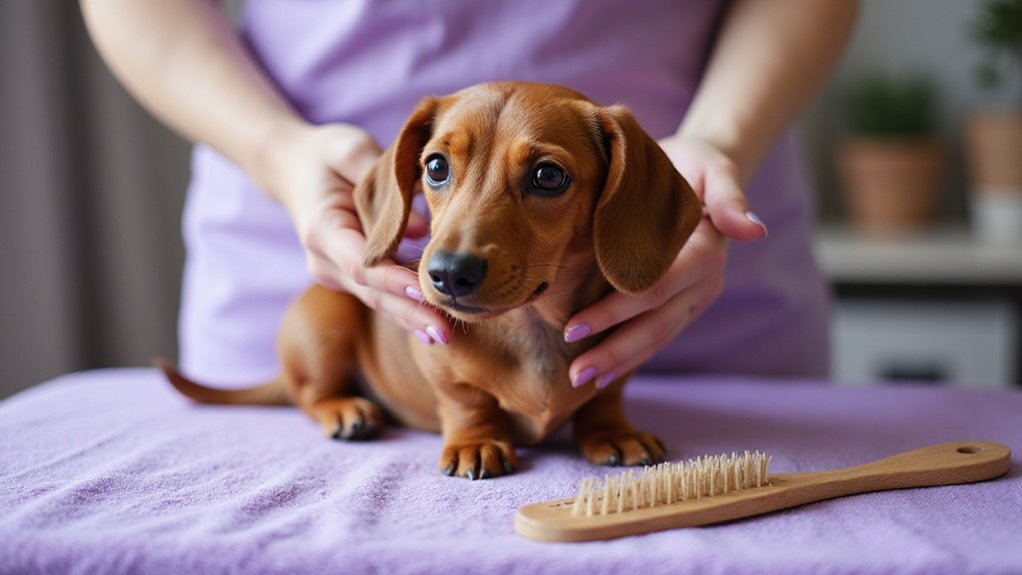
To guarantee your Dachshund feels at ease during grooming, it’s essential to create a calm environment. Choose a quiet, familiar space where your pup feels secure. Soft lighting and soothing music can help reduce anxiety. You might also want to use non-slip mats to keep your Dachshund stable and comfortable. Keep grooming sessions short at first, gradually increasing duration as your dog becomes more relaxed. Always approach your Dachshund gently, offering treats and praise to reinforce positive behavior. This way, your furry friend will associate grooming with a positive experience, making the process less stressful for both of you. Additionally, selecting the right brush for your Dachshund’s coat type can significantly improve the grooming experience, ensuring it is less uncomfortable for your dog.
Choosing the Right Tools for Grooming
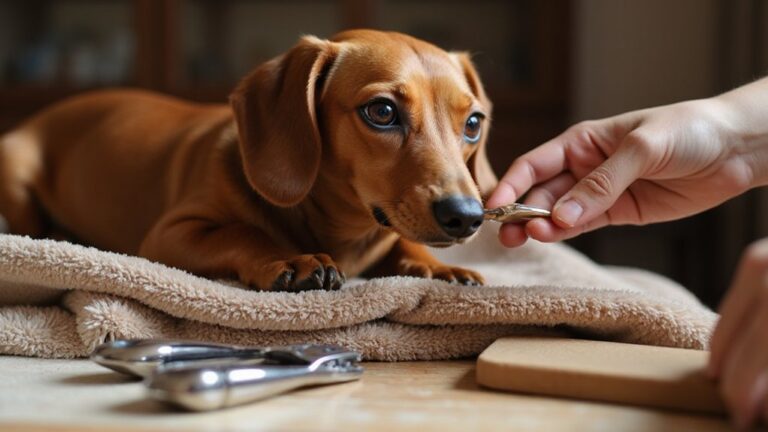
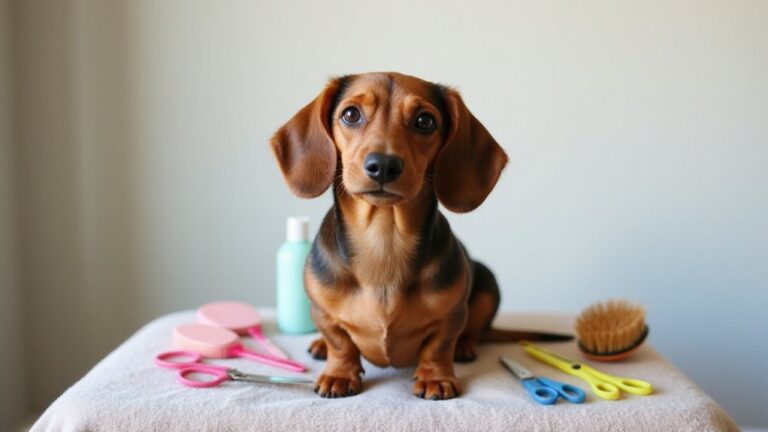
Selecting the right grooming tools is essential for your Dachshund’s comfort and well-being. Start with a gentle brush, like a slicker or pin brush, to remove loose fur without tugging. A soft brush is ideal for sensitive skin. Invest in a quality pair of nail clippers or a grinder to maintain their nails safely. For ear cleaning, use a soft cloth or cotton balls with vet-recommended solution. Always have treats handy to reward your pup during grooming. Choosing tools that suit your dog’s needs will help reduce anxiety and make the experience more enjoyable for both you and your furry friend. Additionally, consider using a best dog shampoo that is formulated for sensitive skin to enhance your grooming routine.
Gradual Desensitization Techniques
Since grooming can be a stressful experience for a nervous Dachshund, gradual desensitization techniques can help ease their anxiety. Start by introducing grooming tools without using them, allowing your dog to sniff and explore at their own pace. Then, gently touch your Dachshund with the tools for short periods, rewarding calm behavior. Gradually increase the duration and intensity, incorporating brushing or trimming as they become more comfortable. Always pay attention to their body language, stopping if they show signs of stress. This slow approach builds trust, making grooming a more positive experience for both you and your furry friend. Additionally, providing a cozy bed for your Dachshund can create a safe space that helps them relax before and after grooming sessions.
Positive Reinforcement Strategies
Building on the foundation of gradual desensitization, incorporating positive reinforcement strategies can further enhance your Dachshund’s grooming experience. Use treats, praise, or playtime to reward your pup whenever they remain calm during grooming sessions. Start with small tasks, like brushing a paw, and immediately reward them for their bravery. This encourages positive associations with grooming. Be consistent—offer rewards every time they cooperate, even if it’s just for a moment. Over time, your Dachshund will learn to anticipate grooming as a pleasant experience, making the process smoother and less stressful for both of you. Consider using delicious treats during the grooming process, as they can significantly motivate your pup.
Short and Frequent Grooming Sessions
Grooming your Dachshund doesn’t have to be a lengthy ordeal. Instead, aim for short and frequent sessions to keep your pup relaxed and engaged. Limit each grooming session to about 5-10 minutes, focusing on one or two tasks at a time, like brushing or nail trimming. This way, your Dachshund won’t feel overwhelmed, and you can gradually build their comfort level. After each session, reward them with treats or praise to reinforce positive experiences. By breaking grooming into manageable chunks, you’ll help your nervous Dachshund associate grooming with pleasant moments rather than stress, making the process easier for both of you. Additionally, consider providing a cozy dog bed for your Dachshund to relax in after grooming, as a comfortable space can enhance their overall well-being.
Seeking Professional Help When Needed
If you find that your Dachshund remains anxious despite your best efforts, it might be time to seek professional help. Groomers experienced with nervous dogs can provide a calming environment and specialized techniques to ease your pup’s anxiety. They know how to handle sensitive dogs and can help them become accustomed to grooming tools and processes. Additionally, a veterinarian or animal behaviorist can assess any underlying issues contributing to your Dachshund’s stress. They may suggest behavior modification strategies or medications to help your furry friend feel more at ease during grooming. Remember, it’s okay to ask for help when needed! Furthermore, the right shoes can also contribute to your Dachshund’s overall comfort during grooming, making the experience less stressful.
Frequently Asked Questions
What Breeds Are Most Prone to Grooming Anxiety?
Breeds most prone to grooming anxiety include Dachshunds, Shih Tzus, and Terriers. Their unique personalities and past experiences can make grooming stressful, so it’s important to approach the process gently and patiently.
How Can I Tell if My Dachshund Is in Pain During Grooming?
You can tell your dachshund’s in pain during grooming if they whine, yelp, or flinch. Watch for tense body language, excessive licking, or trying to escape, as these signs indicate discomfort or distress.
Should I Groom My Dachshund if It’s Shedding Excessively?
Yes, you should groom your dachshund if it’s shedding excessively. Regular grooming helps remove loose fur, reduces mats, and keeps their coat healthy. Just be gentle and patient, especially if your pup feels anxious during the process.
Can Grooming Anxiety Affect My Dachshund’s Overall Health?
Yes, grooming anxiety can affect your dachshund’s overall health. Stress from grooming may lead to behavioral issues, changes in appetite, or even physical health problems. It’s important to create a calm environment during grooming sessions.
What Are Common Signs of Stress in Dachshunds During Grooming?
Common signs of stress in dachshunds during grooming include excessive panting, trembling, growling, hiding, or trying to escape. You might notice changes in their body language, like tucked tails or flattened ears, indicating discomfort.