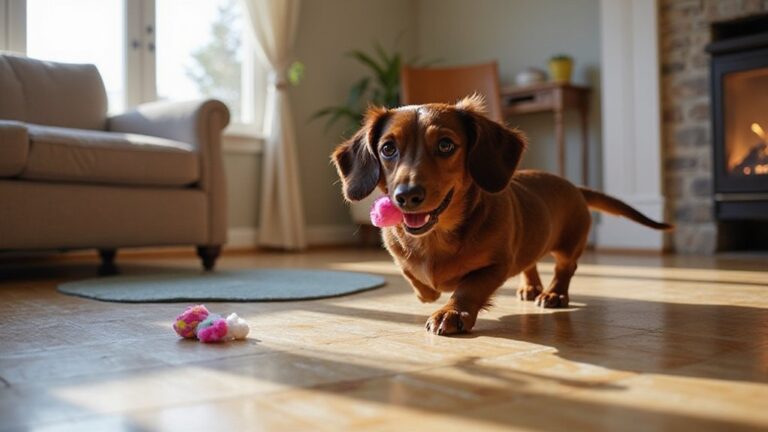

Training a Dachshund in a Flat or Small Home: What Works Best
Training a Dachshund in a flat or small home presents unique challenges and opportunities. You’ll need to take into account their natural instincts and behaviors while adapting your training techniques to a limited space. By focusing on short, engaging sessions and using positive reinforcement, you can create a productive learning environment. But what specific strategies can help you overcome the limitations of small living areas? Let’s explore the best practices to guarantee your Dachshund thrives.
The Essentials
- Conduct short, frequent training sessions in different rooms to keep your Dachshund engaged and focused.
- Use positive reinforcement with treats or praise to encourage desired behaviors during training.
- Create a quiet, distraction-free training environment with familiar scents and soft bedding for comfort.
- Incorporate regular socialization opportunities with other dogs and people to build confidence in your Dachshund.
- Establish a consistent routine for training and daily activities to help your Dachshund feel secure in a small space.
Understanding Your Dachshund’s Behavior
Understanding your Dachshund’s behavior is essential for effective training, especially in a small home where space is limited. These little pups are known for their stubbornness, so recognizing their moods can help you respond appropriately. They may bark or dig when anxious or bored, signaling that they need more mental and physical stimulation. Pay attention to their body language; a wagging tail usually indicates excitement, while a tucked tail can mean fear. Understanding their unique quirks allows you to tailor your training approach, fostering a positive environment that encourages good behavior and strengthens your bond with your furry friend. Providing them with dachshund-friendly toys can also help keep them engaged and reduce undesirable behaviors.
Essential Training Techniques for Small Spaces
While training your Dachshund in a small home can be challenging, it also offers unique opportunities for effective learning. Focus on short, frequent training sessions to maintain your pup’s attention. Use your living space creatively; practice commands in different rooms to keep things engaging. Incorporate leash training indoors to enhance control and discipline. Utilize positive reinforcement, like treats or praise, to encourage good behavior. Socialization is key, so invite friends over or take your Dachshund to pet-friendly locations. Finally, practice patience—progress might be slow, but consistency will lead to a well-trained companion ready for any adventure, big or small. Additionally, consider using interactive toys to stimulate your Dachshund’s mind during training sessions.
Creating a Positive Environment for Learning
To create a positive environment for learning, it’s essential to establish a space where your Dachshund feels safe and comfortable. Choose a quiet area in your flat, free from distractions and noise. Use soft bedding, toys, and familiar scents to make it inviting. Consistency is key, so train at the same time each day to build a routine. Positive reinforcement, like treats and praise, helps your pup associate learning with good experiences. Stay patient and encouraging, allowing your Dachshund to explore and understand at their own pace. A supportive atmosphere fosters confidence, making training more effective and enjoyable for both of you. Additionally, providing a cozy bed for your Dachshund can enhance their comfort and relaxation, promoting a better learning experience.
Socialization Strategies for Dachshunds in Flats
Socialization is essential for Dachshunds, especially in a flat where space can be limited. Start by introducing your pup to a variety of people and other dogs. Take short trips to dog parks or pet-friendly cafes, allowing them to interact in controlled environments. Utilize local pet classes to meet other dogs and experience new situations. Regular visits to busy areas help your Dachshund become accustomed to different sounds and sights. Always reward positive interactions, reinforcing good behavior. Consistency is key; make socialization a daily routine, ensuring your Dachshund grows into a confident and well-adjusted companion, even in a small space. Additionally, consider integrating specialized training techniques that cater to Dachshunds’ unique temperament and needs.
Exercise and Play: Keeping Your Dachshund Active
Ensuring your Dachshund gets enough exercise and playtime is just as important as socializing them. In a small home, you can utilize short, frequent walks around the block to keep them active. Interactive toys, like puzzle feeders, stimulate their minds while encouraging movement. Consider designated play sessions with balls or tug toys in your living space. If possible, visit nearby parks for off-leash time, allowing your Dachshund to explore and run. Incorporating these activities not only helps burn off energy but also strengthens your bond. Remember, a tired Dachshund is a happy one, so mix up the routine to keep things exciting! Additionally, incorporating delicious treats during training sessions can motivate your Dachshund and make activities even more enjoyable.
Addressing Common Challenges in Small Homes
While living in a small home can present unique challenges for training a Dachshund, it doesn’t have to hinder your success. One common issue is limited space for activities. To tackle this, use vertical space for playtime and training—think stairs or furniture for agility exercises. Noise can also be a distraction; consider using a white noise machine to minimize outside sounds. Finally, establish a consistent routine to help your Dachshund feel secure. Regular short training sessions work wonders, keeping your pup engaged without overwhelming them. Additionally, incorporating essential dog steps can assist your Dachshund in navigating smaller areas safely. With patience and creativity, you can effectively train your Dachshund in a cozy environment.
Building a Strong Bond Through Training
Training your Dachshund isn’t just about teaching commands; it’s also a fantastic opportunity to strengthen your bond. When you engage in training sessions, you’re spending quality time together, enhancing trust and communication. Use positive reinforcement to reward good behavior, and your pup will associate training with fun and love. Make each session a playful experience, incorporating games and treats to keep their interest high. As you work through challenges together, you’ll both feel accomplished. Remember, consistency is key; the more you practice, the deeper your connection will grow. Ultimately, training is a journey that brings you closer as companions. Additionally, providing a comfortable space, such as a best dog bed for dachshunds, can help create an inviting atmosphere for training sessions.
Frequently Asked Questions
What Are the Best Toys for Dachshunds in Small Spaces?
The best toys for Dachshunds in small spaces are soft plush toys, interactive puzzle toys, and small balls. These engage their minds, encourage gentle play, and fit easily into your living area without taking up much space.
How Can I Prevent Barking in a Flat?
You can prevent barking by providing mental stimulation, establishing a routine, and using positive reinforcement. Redirect their attention with toys or training exercises, and make certain they’re getting enough physical activity to reduce excess energy.
Are There Specific Commands for Small Living Areas?
Yes, focus on commands like “quiet,” “stay,” and “come.” These help maintain peace in small spaces. Using them consistently reinforces good behavior, allowing your Dachshund to thrive in a cozy environment without unnecessary disruptions.
How Do I Manage a Dachshund’s Separation Anxiety at Home?
To manage your Dachshund’s separation anxiety, create a safe space, use calming toys, practice short departures, and gradually increase alone time. Consistency and positive reinforcement will help your pup feel more secure at home.
What Should I Do if My Dachshund Refuses to Train Indoors?
If your dachshund refuses to train indoors, try making it more engaging with treats or toys. Short, consistent sessions work best, and guarantee your dog feels comfortable and secure in the training environment.