
House Training a Dachshund: Why Its Hard and How to Succeed
House training a Dachshund can be a real challenge, and you might find yourself feeling frustrated at times. Their stubborn nature often complicates the process, making it tough to establish a consistent routine. But understanding their unique personality is just the first step. Discovering effective strategies and techniques can lead to a successful outcome. So, what are the key elements that will help you turn this challenge into a rewarding experience?
The Essentials
- Dachshunds’ stubbornness can hinder training, making it crucial to remain patient and consistent throughout the process.
- Establish a regular routine, taking them outside frequently after meals, naps, and playtime to encourage bathroom habits.
- Use a designated potty area to help your Dachshund recognize where to go, reinforcing positive behavior with immediate praise and treats.
- Pay attention to signs of needing to go out, like sniffing, pacing, or whining, to prevent indoor accidents.
- Utilize crate training to teach boundaries and encourage your Dachshund to hold their bladder until taken outside.
Understanding the Dachshund Personality
When you think about owning a Dachshund, it’s essential to understand their unique personality traits. These little dogs are known for their spirited and independent nature, which can be both charming and challenging. They’re incredibly loyal, often forming strong bonds with their families. However, their stubborn streak can make training a bit tricky. Dachshunds are playful and curious, always ready to explore their surroundings. They can be protective, too, which might lead to barking at unfamiliar noises. Embracing their quirks will help you create a loving environment, ensuring a rewarding relationship with your new furry friend. Additionally, understanding their unique personality traits can help you select perfect presents for Dachshund lovers that cater to their needs.
Common Challenges in House Training
While house training a Dachshund can be rewarding, it often comes with its share of challenges. These little pups can be stubborn, making it tough to establish a consistent routine. They might not signal when they need to go outside, leading to accidents in the house. Additionally, their strong-willed nature can result in resistance to commands. You may also encounter setbacks due to distractions, such as other pets or noises. It’s essential to stay patient and persistent, as each Dachshund learns at its own pace. Understanding these challenges will help you navigate the training process more effectively. Choosing the right brush for your Dachshund can also support their overall health and comfort during training, as proper grooming helps minimize distractions caused by their shedding coat.
Essential Supplies for Successful Training
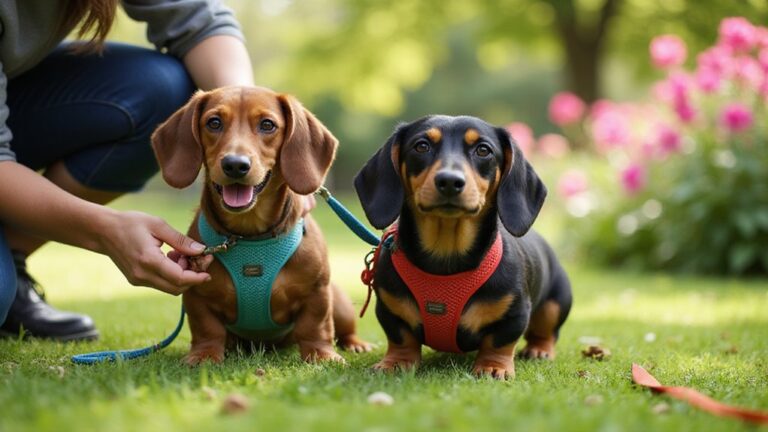
Steering through the challenges of house training a Dachshund requires the right tools to support your efforts. First, invest in high-quality puppy pads or an outdoor potty area. Having a crate is essential for teaching boundaries and encouraging den-like behavior. You’ll also need enzymatic cleaners to eliminate accidents’ odors, preventing repeat offenses. A training clicker can aid in reinforcing good behavior, while treats serve as positive reinforcement. Additionally, consider a leash and harness for outdoor breaks. With these supplies, you’ll create a structured environment that fosters successful training and builds a strong bond with your Dachshund. The right dog crate for small breeds can also provide a safe space for your pet during training.
Effective Potty Training Techniques
To successfully potty train your Dachshund, consistency is key. Start by taking them outside frequently, especially after meals, naps, and playtime. Use a designated potty spot to help them recognize where they should go. When they do their business outside, immediately praise them with treats or affectionate words. If accidents happen indoors, don’t scold; clean the area thoroughly to remove any lingering odors. Consider using a crate to help them learn to hold it until they’re let outside. Additionally, using essential dog steps can help your Dachshund navigate the home more easily during their training process. With patience and positive reinforcement, your Dachshund will learn where it’s appropriate to potty and feel more secure in your home.
Establishing a Consistent Routine
Creating a consistent routine is essential for your Dachshund’s potty training success. Establish specific times for feeding, bathroom breaks, and playtime. By feeding your pup at the same times each day, you’ll regulate their bathroom schedule. Take them outside first thing in the morning, after meals, and before bedtime. Consistency helps your Dachshund learn when to expect these opportunities. Be patient and stick to your schedule, even on weekends. Remember, the more predictable the routine, the easier it’ll be for your dog to understand when it’s time to go outside. This foundation sets the stage for successful potty training. Additionally, providing a comfortable dog bed can create a calming space for your Dachshund, aiding in their overall training experience.
Recognizing Signs Your Dachshund Needs to Go
How can you tell when your Dachshund needs to go outside? Look for signs like sniffing around, circling, or whining. They might also scratch at the door or pace anxiously. If your Dachshund suddenly becomes restless, it’s a clear indication they need to relieve themselves. You might notice them squatting or assuming a posture that suggests they’re about to go. Pay attention to their body language, as it’s key to understanding their needs. Recognizing these signs helps you respond promptly, ensuring your Dachshund has the chance to go outside and avoid accidents in your home. Additionally, providing engaging toys can help reduce anxiety, making it easier for your Dachshund to signal their need to go outside.
Encouraging Positive Behavior and Reinforcement
Encouraging positive behavior in your Dachshund during house training is essential for success. Use treats, praise, and affection to reinforce good habits when he goes outside or uses the designated area. Be consistent with your rewards; this helps him associate the action with positive outcomes. If he has an accident indoors, don’t scold him—this can create fear and confusion. Instead, redirect him to the right spot and reward him when he goes there. Remember to be patient; it takes time for him to understand what you expect. Consistency and positive reinforcement will help your Dachshund thrive in his training. Additionally, incorporating delicious treats can make the training process more enjoyable for your pup.
Frequently Asked Questions
How Long Does House Training Usually Take for a Dachshund?
House training a Dachshund usually takes anywhere from a few weeks to several months, depending on consistency and your pup’s temperament. Be patient, stay committed, and celebrate small victories to encourage progress along the way.
Can Older Dachshunds Be House Trained Successfully?
Yes, older dachshunds can be house trained successfully. It might take patience and consistency, but with the right approach, they can learn to adapt their habits. Don’t lose hope; every dog can improve!
What Should I Do if My Dachshund Has Accidents Indoors?
If your dachshund has accidents indoors, don’t punish them. Instead, clean the area thoroughly to eliminate odors, and reinforce positive behavior with praise and treats when they go outside. Consistency is key for success.
Are There Specific Foods That Aid in House Training?
Yes, certain foods can aid in house training. Opt for high-fiber diets that promote regular bowel movements. Just be cautious with treats, ensuring they’re easy to digest and won’t cause digestive issues during training.
How Can I Socialize My Dachshund During House Training?
To socialize your dachshund during house training, expose them to different environments, people, and other dogs. Encourage positive interactions and reward good behavior, gradually building their confidence and helping them adapt to new experiences.