Training Two Dachshunds at the Same Time: Tips and Traps
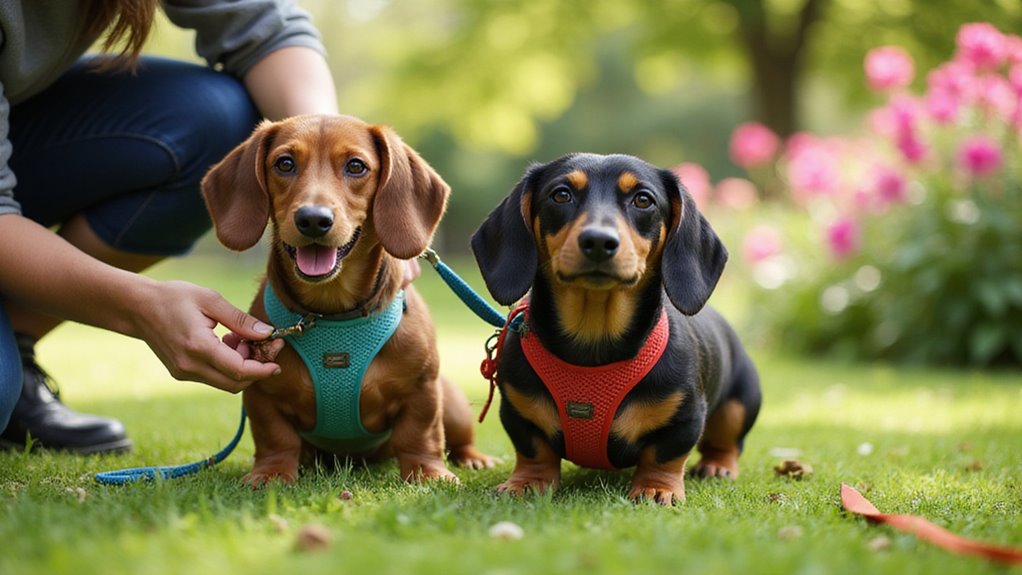
Training two Dachshunds at the same time can be quite the balancing act. You’ll need to evaluate their individual personalities and establish a clear training schedule. If you’re not careful, competition and jealousy can quickly arise. Using positive reinforcement is key, but it’s not the only factor to keep in mind. As you navigate this journey, there are important tips and common traps to avoid. Let’s explore these further.
The Essentials
- Recognize each Dachshund’s personality to tailor training methods; energetic ones may need different approaches than stubborn or reserved ones.
- Establish a consistent training schedule with short sessions of 10-15 minutes, alternating individual and joint training times.
- Use positive reinforcement immediately to reward desired behaviors, ensuring consistency to prevent jealousy between the two pups.
- Provide individual attention during training to minimize competition and encourage teamwork with collaborative tasks.
- Incorporate group training sessions for socialization, keeping them short and engaging with treats and interactive toys for stimulation.
Understanding Individual Personalities
When you’re training two Dachshunds, understanding each dog’s individual personality is crucial, as it can greatly influence your approach. One might be energetic and keen to please, while the other could be more stubborn or reserved. Recognizing these traits helps you tailor your training methods. For instance, a more enthusiastic pup may respond well to positive reinforcement, while the other might need patience and gradual exposure to new commands. It’s essential to observe their reactions and adjust your techniques accordingly. Connecting with each dog’s unique character can enhance their learning experience and strengthen your bond with them during training. Incorporating their favorite Dachshund-friendly toys can also make training sessions more engaging and enjoyable.
Establishing a Training Schedule
Establishing a training schedule for your two Dachshunds can make a significant difference in their learning process. Consistency is key, so set aside specific times each day for training sessions. Aim for short, focused sessions of about 10-15 minutes to keep their attention. Consider alternating days for each dog to address their individual needs, but also schedule joint sessions to encourage teamwork. Don’t forget to include breaks for playtime and relaxation, as this helps reinforce learning. Keep an eye on their progress and adjust the schedule as needed to guarantee both Dachshunds are engaged and thriving in their training. Additionally, providing cozy beds for Dachshunds can help create a comfortable environment for them to rest and recharge after training.
Using Positive Reinforcement
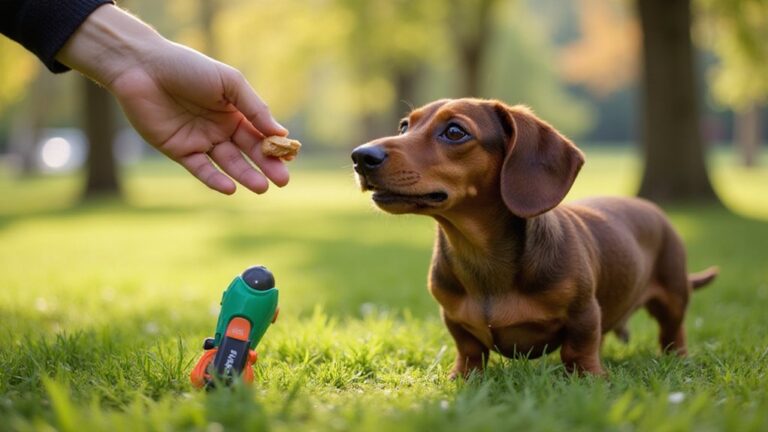
Positive reinforcement is one of the most effective training techniques for your Dachshunds. When they perform a desired behavior, reward them immediately with treats, praise, or playtime. This method encourages them to repeat those behaviors, making training a positive experience. Be consistent with your rewards, and make sure both pups receive equal attention to avoid jealousy. Start with simple commands like “sit” or “come,” and gradually introduce more complex tasks. Remember, patience is key! Celebrate their successes, no matter how small, and keep training sessions short and engaging. This will help your Dachshunds learn while strengthening your bond with them. Additionally, using tools like slow feeder dog bowls can also promote positive behavior during feeding times, making mealtime a rewarding experience for them.
Avoiding Competition Between Pups
Training two Dachshunds can be a rewarding experience, but it’s important to prevent competition between them. To do this, give each pup individual attention during training sessions. Use separate training times, where one dog watches or relaxes while you focus on the other. This way, both pups won’t feel the need to outdo each other. Also, avoid giving treats or praise simultaneously, as it may lead to jealousy. Encourage teamwork by rewarding them for working together, fostering a supportive environment. By creating a balance, you’ll help your Dachshunds become more cooperative and less competitive, enhancing their training experience. Selecting the right collar for Dachshund can also contribute to a more effective training session, ensuring comfort and control.
Incorporating Group Training Sessions
While individual training sessions are essential, incorporating group training can take your Dachshunds’ skills to the next level. In a group setting, your pups will learn to focus amidst distractions, enhancing their socialization skills. Try organizing playdates with other dogs or attending a local training class. This not only builds camaraderie between your Dachshunds but also fosters healthy competition, motivating them to perform better. Be sure to keep sessions short and engaging, using treats to reward positive behavior. Additionally, incorporating interactive toys for dachshunds can further stimulate their minds during these sessions. Remember, patience is key; it may take time for them to adjust, but the results will be well worth it.
Monitoring Progress and Adjusting Techniques
As your Dachshunds engage in group training sessions, it’s important to keep an eye on their progress and adjust your techniques accordingly. Observe how each dog responds to commands and cues; one might learn faster than the other. If one seems distracted or overwhelmed, consider breaking tasks into smaller steps. Don’t hesitate to switch up your rewards; some pups might respond better to treats, while others prefer praise or playtime. Regularly assess their behavior and adapt your training methods to guarantee both are challenged yet comfortable. Remember, being flexible in your approach helps foster a positive learning environment for both Dachshunds. Additionally, using the best brush for Dachshund can help maintain their coat, which is essential for their overall well-being during training sessions.
Maintaining Consistency and Patience
Consistency and patience are essential when training your Dachshunds, especially since they thrive on routine. Establish a clear set of commands and stick to them; mixed signals can confuse them. Make training sessions short and engaging, ideally around 5-10 minutes, so they stay focused. Reward them promptly for good behavior to reinforce learning. Remember, both dogs may progress at different rates, so don’t rush the process. If one seems stuck, take a step back and reassess your approach. Staying calm helps create a positive environment, making training enjoyable for both you and your pups. Additionally, providing a comfortable dog bed can help your Dachshunds relax and recharge between training sessions. Keep practicing, and you’ll see results!
Frequently Asked Questions
Can I Train Puppies and Adults Together Effectively?
Yes, you can train puppies and adults together effectively. Just guarantee the training sessions are engaging and tailored to each dog’s needs. Be patient, as the learning pace may differ between the two age groups.
What Are Common Training Mistakes With Multiple Dogs?
Common training mistakes with multiple dogs include inconsistent commands, favoring one dog, and not managing distractions. It’s vital to guarantee each dog gets individual attention while maintaining a structured environment to avoid confusion and frustration.
How Do I Manage Distractions During Training?
To manage distractions during training, keep sessions short, use high-value treats, and gradually introduce distractions. Focus on one dog at a time, rewarding them for attention, and slowly increase challenges as they improve.
Should I Use Different Commands for Each Dog?
Yes, you should use different commands for each dog. This helps them distinguish between cues, making training more effective. Consistency with individual commands can also prevent confusion and improve their learning experience overall.
How Can I Encourage Bonding Between My Dogs During Training?
To encourage bonding during training, use joint exercises, reward them simultaneously, and incorporate playtime. This’ll help them associate positive experiences with each other, strengthening their relationship and making training sessions more enjoyable for both of you.