
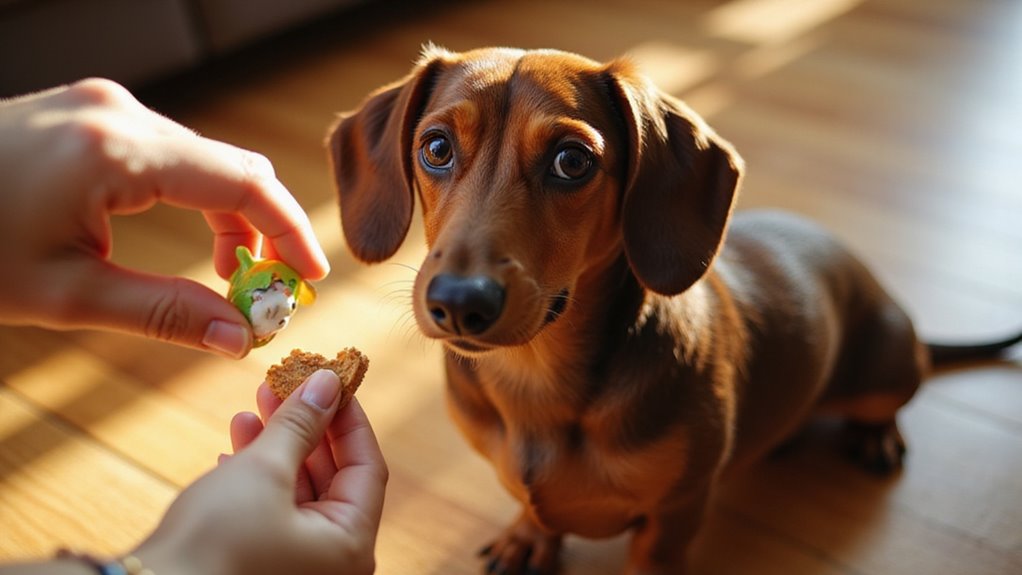
Using Positive Reinforcement With Stubborn Dachshunds
When it comes to training stubborn Dachshunds, understanding their unique behavior is key. These little dogs often have minds of their own, making it essential to approach their training with patience and strategy. By using positive reinforcement, you can turn their independence into a cooperative spirit. But how do you find the right rewards that truly motivate them? Let’s explore effective techniques that can make a real difference in your training journey.
The Essentials
- Use high-value treats that excite your Dachshund to reinforce desired behaviors effectively.
- Break training goals into smaller steps to accommodate their stubborn nature and ensure success.
- Incorporate short, consistent sessions to maintain your Dachshund’s attention and enthusiasm.
- Utilize clicker training to instantly mark and reward desired actions for clarity in communication.
- Celebrate small victories to boost motivation and create a positive training atmosphere.
Understanding Your Dachshund’s Behavior
To effectively train your Dachshund, it’s essential to understand their unique behaviors. These little dogs are known for their stubbornness and strong personalities. They can be independent thinkers, often wanting to do things their own way. You’ll notice that they can be both curious and playful, but also possessive of their space. Socialization is vital; they may be wary of strangers but often warm up quickly. Their hunting instincts can kick in, making them chase after small animals. By recognizing these traits, you can tailor your training approach, ensuring a more successful and enjoyable experience for both you and your Dachshund. Additionally, incorporating Dachshund-friendly toys can help keep them engaged during training sessions.
The Basics of Positive Reinforcement
While training your Dachshund, understanding the principles of positive reinforcement can make a significant difference in your approach. This method involves rewarding your dog for desired behaviors, encouraging them to repeat those actions. Instead of punishment, focus on reinforcing what your Dachshund does right, which helps build trust and a strong bond between you two. Timing is essential; reward immediately after the behavior to create a clear connection. Consistency is also key—use the same cues and rewards each time. By establishing this positive environment, you’ll find your stubborn Dachshund more willing to learn and cooperate during training sessions. Additionally, incorporating delicious treats can greatly enhance the effectiveness of positive reinforcement.
Choosing the Right Rewards
Choosing the right rewards can greatly enhance your Dachshund’s training experience, as it helps motivate and engage them. Start by identifying what excites your pup—some might prefer tasty treats, while others enjoy toys or praise. Experiment with different options to see what your Dachshund responds to best. Remember, the reward should be immediate and relevant to the behavior you want to reinforce. Keep treats small and healthy to avoid overindulgence. Mix things up occasionally to maintain their interest. Ultimately, the right rewards can make training enjoyable for both you and your stubborn little companion. Additionally, incorporating delicious treats that your Dachshund loves can significantly boost their enthusiasm during training sessions.
Setting Realistic Training Goals
Finding the right rewards is just the beginning; setting realistic training goals is equally important for your Dachshund’s success. Start by identifying what you want to achieve, like mastering basic commands or improving leash manners. Break those goals into smaller, manageable steps. For instance, if you want your Dachshund to sit on command, practice in short sessions, rewarding progress along the way. Celebrate each small victory to keep motivation high. Remember, patience is key—Dachshunds can be stubborn, so adjusting your expectations based on their learning pace will help you both stay positive and engaged throughout the training process. Additionally, providing a comfortable and cozy dog bed for your Dachshund can create a positive environment that supports their training efforts.
Effective Training Techniques for Dachshunds
Effective training techniques are essential for helping your Dachshund learn and thrive. Start with short, consistent sessions to keep their attention. Use high-value treats as rewards for good behavior, ensuring your pup associates training with positive experiences. Incorporate clicker training to mark desired actions instantly. Be patient and use a calm voice; Dachshunds respond better to gentle encouragement than harsh corrections. Consistency is key—use the same commands and cues each time. Finally, mix in fun activities, like games or agility exercises, to keep your Dachshund engaged and enthusiastic to learn. Remember, positive reinforcement builds a strong bond between you and your pet. Additionally, consider incorporating best Dachshund gifts as rewards to further motivate your furry friend during training sessions.
Creating a Positive Training Environment
Creating a positive training environment can greatly enhance your Dachshund’s learning experience. Start by choosing a quiet, comfortable space free from distractions. This’ll help your pup focus on you and the tasks at hand. Use engaging toys or treats to keep them motivated. Make sure to keep your tone upbeat and encouraging, as this positivity will foster trust between you two. Be patient during training sessions, and remember to give breaks when needed; overloading your Dachshund can lead to frustration. By establishing a supportive atmosphere, you’ll set the stage for successful learning and a stronger bond with your furry friend. Additionally, ensuring your Dachshund has a comfortable place to rest, like a well-chosen dog bed, can positively impact their overall well-being and readiness to learn.
Tracking Progress and Celebrating Success
While it’s important to focus on training your Dachshund, tracking their progress can make the experience even more rewarding. Keep a journal or use an app to note each session’s successes, whether it’s mastering a command or showing improved behavior. Celebrate small victories, like sitting on command for the first time, with a treat or extra playtime. This not only motivates your Dachshund but reinforces positive behaviors. Remember, consistency is key. Regularly reviewing their progress helps you adjust your training methods and boosts your confidence. By celebrating every milestone, you’ll strengthen your bond and make training enjoyable for both of you. Additionally, using tools like slow feeder dog bowls can help prevent distractions during training sessions, making it easier to focus on your Dachshund’s progress.
Frequently Asked Questions
Can Stubbornness in Dachshunds Be Hereditary?
Yes, stubbornness in Dachshunds can be hereditary. If you notice traits like persistence, it might be a genetic trait passed down through generations. Understanding this can help you approach training more effectively with your pup.
How Long Should Training Sessions Last With Dachshunds?
Training sessions for dachshunds should last around 5 to 10 minutes. Keeping them short helps maintain their attention and prevents frustration. Regular, brief sessions are more effective for learning than longer, drawn-out ones.
What Age Is Best to Start Training a Dachshund?
You should start training your dachshund as early as eight weeks old. Early socialization and basic commands are essential, helping them develop good behaviors and a strong bond with you as they grow.
Are There Specific Commands Dachshunds Struggle With the Most?
Dachshunds often struggle with commands like “stay,” “come,” and “leave it.” Their independent nature can make consistency challenging, but with patience and positive reinforcement, you can help them master these commands effectively.
How Can I Tell if My Dachshund Is Bored During Training?
If your dachshund’s losing focus, yawning, or ignoring commands, it’s likely bored. Look for signs like wandering off or lack of enthusiasm. Keep training sessions short and engaging to maintain their interest and motivation.