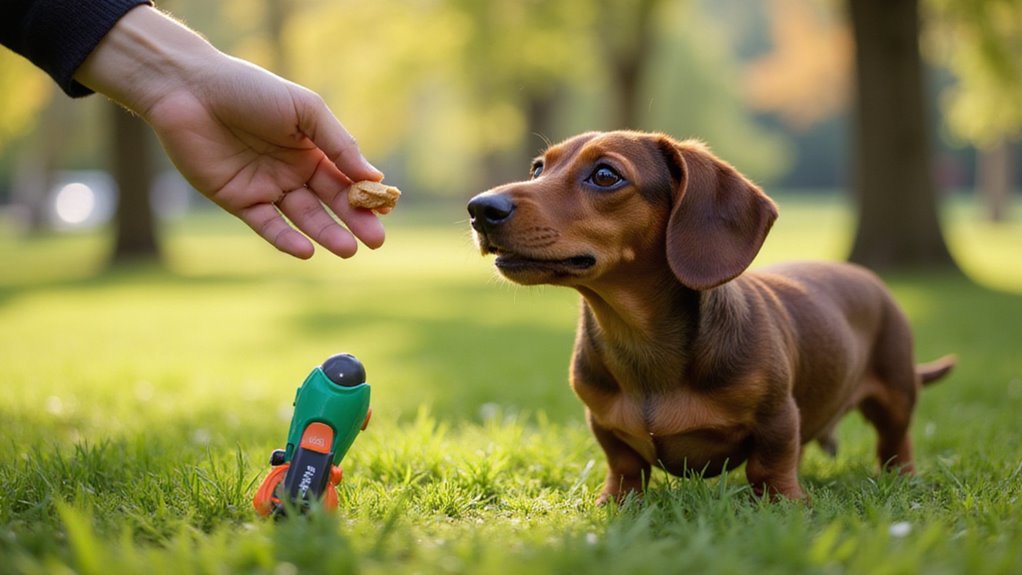
Clicker Training for Dachshunds: Simple Exercises to Start With
If you’re looking to teach your dachshund some basic commands, clicker training can be a highly effective approach. It uses positive reinforcement to encourage desired behaviors, making learning enjoyable for both you and your dog. You might be wondering where to start and which exercises will yield the best results. Understanding the fundamentals of clicker training is essential before moving on to specific commands and techniques that can enhance your training experience.
The Essentials
- Begin by familiarizing your dachshund with the clicker, clicking, and treating to create a positive association.
- Teach basic commands like “sit,” “stay,” and “come” using the clicker to mark correct behaviors.
- Break down complex tasks into smaller steps, clicking and rewarding for each small success.
- Keep training sessions short (5-10 minutes) and free from distractions to maintain focus and interest.
- Use high-value treats to motivate your dachshund and end sessions positively with praise or playtime.
Understanding Clicker Training
Clicker training is a popular and effective method for teaching your dachshund new behaviors and commands. This technique relies on a small device that makes a distinct sound, signaling to your pup that they’ve done something right. When you click, you’ll follow it up with a treat, creating a positive association. It’s essential to use the clicker immediately after your dog performs the desired action, so they connect the dots. With consistency and patience, your dachshund will begin to understand what behaviors earn that rewarding click. It’s a fun and engaging way to bond with your furry friend while teaching them new skills. Additionally, incorporating dachshund-friendly toys during training can help maintain your dog’s interest and motivation.
Getting Started With Your Clicker
Before you begin training, it’s important to familiarize yourself and your dachshund with the clicker. Start by letting your pup sniff the clicker; make it a positive experience. Once your dachshund is comfortable, press the clicker and immediately offer a treat. Repeat this several times, creating a clear link between the click sound and the reward. This builds anticipation and excitement for your pup. Choosing the right dog bed can also help provide a comfortable environment for training sessions. Practice this in short sessions, ensuring your dachshund remains engaged. Remember to stay patient; it may take a little time for your dog to understand the connection. Enjoy this bonding time before diving into specific commands!
Basic Commands to Teach Your Dachshund
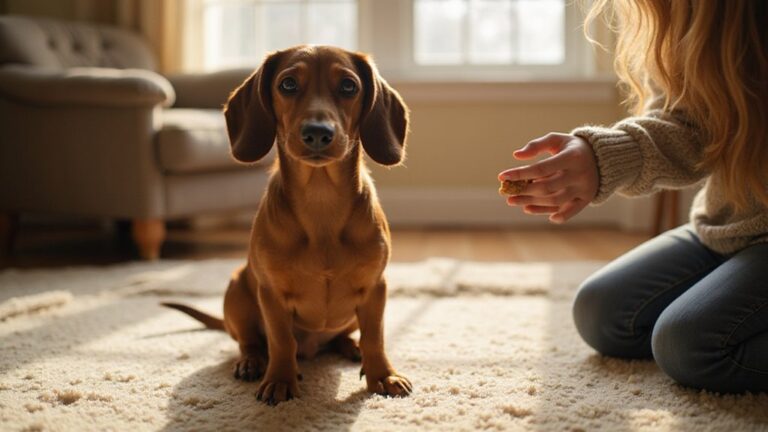
Teaching your dachshund basic commands can be an enjoyable experience for both of you. Start with simple commands like “sit,” “stay,” and “come.” Use the clicker to mark the desired behavior, followed by a tasty treat. For “sit,” hold a treat above their nose and move it back, encouraging them to sit. Once they do, click and reward. For “stay,” ask them to sit, then take a step back, clicking when they remain in place. With patience and consistency, your dachshund will grasp these commands quickly, strengthening your bond and enhancing their obedience. Additionally, be sure to choose delicious treats that will motivate your dachshund during training. Happy training!
Shaping Behavior With Clicker Training
Shaping behavior with clicker training can be a rewarding process that transforms your dachshund’s actions into desired responses. You’ll start by breaking down complex behaviors into smaller, manageable steps. When your pup makes progress, use the clicker to mark that moment and follow it up with a treat. Be patient; reinforcement helps your dachshund understand what you want. If they stray from the desired behavior, gently guide them back. Consistency is key, so practice regularly and celebrate each small success. Over time, you’ll see your dachshund develop new skills and confidence, strengthening your bond in the process. Additionally, consider incorporating best dachshund gifts to enhance your training sessions and motivate your pup.
Fun Tricks to Try With Your Dachshund
Once you’ve got the basics of clicker training down, it’s time to have some fun! Try teaching your Dachshund to spin in circles—just lure them with a treat while clicking when they complete the turn. You can also teach them to shake paws. Encourage them to lift a paw with a treat, clicking when they do. Another fun trick is playing dead; teach your pup to roll over after saying “bang.” Remember to keep sessions short and upbeat. With patience and encouragement, your Dachshund will love showing off these tricks, making training a delightful experience for both of you! Additionally, incorporating interactive toys during training can enhance your Dachshund’s engagement and focus.
Common Mistakes to Avoid
While you’re excited to train your Dachshund, it’s easy to make some common mistakes that can hinder progress. One major pitfall is inconsistency; using different commands or rewards can confuse your pup. Also, don’t forget to keep sessions short—Dachshunds have short attention spans, so longer sessions can lead to frustration. Avoid punishing your dog for mistakes; instead, focus on reinforcing positive behavior. Finally, be patient. If your Dachshund doesn’t grasp a trick right away, give them time. Remember, training should be a fun bonding experience, not a chore. Recognizing these mistakes will help guarantee a smoother training journey. Additionally, using the right tools, such as a proper brush for your Dachshund, can enhance your training experience by ensuring your dog is comfortable and well-groomed.
Tips for Successful Training Sessions
To guarantee your training sessions are effective, start by establishing a calm and positive environment. Choose a quiet space with minimal distractions, making it easier for your dachshund to focus. Keep sessions short, around 5 to 10 minutes, to maintain their interest and attention. Use high-value treats for motivation, and always reward immediately after a desired behavior. Consistency is key—stick to the same commands and cues. Mix in fun games to keep things engaging, and remember to be patient. Ending on a positive note, with praise or playtime, will reinforce a love for learning and strengthen your bond. Additionally, providing a cozy bed tailored for dachshunds can create a comforting space for them to relax after training sessions, promoting a restful recovery.
Frequently Asked Questions
Can Clicker Training Work for Older Dachshunds?
Yes, clicker training can work for older dachshunds! They can learn new behaviors at any age, and positive reinforcement helps build confidence. Patience and consistency are key to making it effective for your senior dog.
How Long Should Each Training Session Last?
Each training session should last about 5 to 10 minutes. Keeping it short helps maintain your dog’s focus and enthusiasm. If they seem tired or distracted, it’s best to end on a positive note.
What if My Dachshund Is Not Food Motivated?
If your dachshund isn’t food motivated, try using toys, praise, or playtime as rewards. Experiment with different motivators to see what excites them, and keep training sessions fun and engaging for better results.
Can I Use a Different Sound Instead of a Clicker?
Yes, you can use a different sound instead of a clicker. Try using a whistle, a clap, or even a verbal cue. Just make certain it’s consistent and distinct, so your dachshund recognizes it during training.
How Often Should I Practice Training With My Dachshund?
You should practice training with your dachshund daily, but keep sessions short—around 5 to 10 minutes. Consistency helps reinforce learning, and shorter sessions can keep your pup engaged and enthusiastic to participate.