
How Often Should Senior Dachshunds See the Vet?
As your Dachshund ages, regular veterinary visits become increasingly important. You might wonder how often your senior dog should see the vet to guarantee their health is properly monitored. With potential health issues lurking, it’s essential to stay ahead of any problems. But what signs should you look for, and how can preventive care make a difference? Let’s explore the best practices for caring for your aging companion.
The Essentials
- Senior Dachshunds should visit the vet every six months for regular health assessments.
- Frequent check-ups help monitor weight, dental health, and overall well-being.
- Discuss any behavioral or health concerns during veterinary visits.
- Dogs with existing health conditions may require more frequent visits.
- Preventive care is crucial for early detection of health issues and maintaining quality of life.
Understanding the Aging Process in Dachshunds
As your Dachshund ages, you might notice changes in their energy levels and behavior, which can be concerning. Aging is a natural process, and it affects each dog differently. You may find they tire more easily during walks or prefer cozy spots over playful antics. Their joints might stiffen, leading to reluctance in jumping or climbing stairs. Cognitive functions can also shift, causing confusion or anxiety. It’s crucial to recognize these signs, as they can help you adjust their routine and environment for comfort. Keeping an eye on these changes guarantees your furry friend enjoys their golden years to the fullest. Providing them with a comfortable sleeping space, such as cozy dog beds, can enhance their overall well-being during this time.
Recommended Veterinary Visit Frequency for Senior Dogs
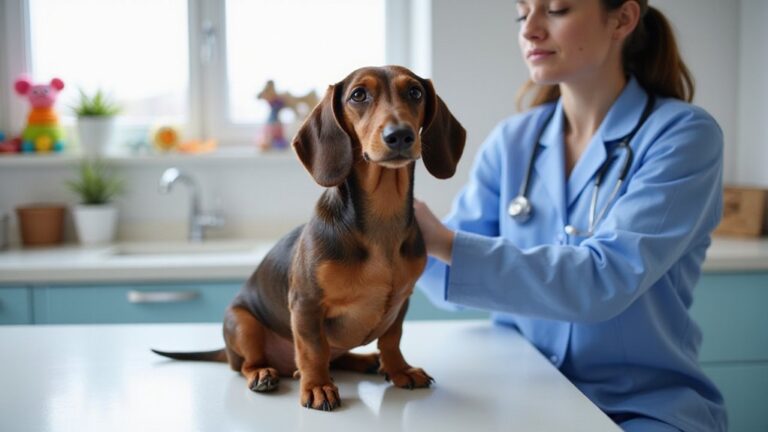
For senior Dachshunds, it’s generally recommended to schedule veterinary visits at least every six months. As your pup ages, regular check-ups become essential for monitoring their health and catching any potential issues early. These visits allow your vet to assess your dog’s weight, dental health, and overall well-being. You might also discuss any behavioral changes or concerns you’ve noticed. If your Dachshund has existing health conditions, your vet may suggest more frequent visits. Staying proactive about your senior dog’s health guarantees they live their golden years comfortably and happily, giving you peace of mind as a responsible pet owner. Additionally, ensuring your Dachshund has a comfortable dog bed can significantly improve their quality of life during their senior years.
Common Health Issues in Senior Dachshunds
While senior Dachshunds can bring joy and companionship, they’re also prone to a range of health issues that may affect their quality of life. Common problems include obesity, which can exacerbate joint issues; intervertebral disc disease, leading to back pain; and dental disease. You might notice changes in their eyesight or hearing, as well as increased anxiety or behavioral shifts. Additionally, conditions like arthritis can make mobility difficult. Regular check-ups can help identify these issues early, allowing you to manage their health effectively and guarantee your furry friend stays happy and comfortable in their golden years. Providing delicious treats that support their health can also make a positive difference in their overall well-being.
Signs Your Senior Dachshund Needs to See the Vet
Recognizing when your senior Dachshund needs to see the vet is essential for maintaining their health and well-being. Look out for changes in appetite or drinking habits, as this can indicate underlying issues. If your dog seems lethargic, has difficulty moving, or struggles to jump, it’s time for a check-up. Excessive barking, whining, or hiding may also signal discomfort or pain. Watch for unusual weight loss or gain, and be alert to changes in bathroom habits. Finally, any visible lumps, bumps, or skin irritations should prompt a visit. Trust your instincts; you know your dog best. Providing delicious treats can also help in monitoring their appetite and overall health.
Importance of Preventive Care for Aging Pets
As your Dachshund ages, prioritizing preventive care becomes essential to ensuring a long and healthy life. Regular vet visits can catch health issues early, allowing for timely intervention. Vaccinations, dental care, and screenings for common age-related conditions can greatly enhance your pet’s quality of life. By maintaining a consistent check-up schedule, you also provide your Dachshund with a familiar environment, reducing stress during visits. Additionally, discussing nutrition and exercise tailored to your senior dog’s needs can help manage weight and mobility. Preventive care isn’t just about treatment; it’s about keeping your beloved companion happy and thriving in their golden years. Providing stylish coats for your Dachshund during colder months can also support their overall comfort and health.
Tips for Preparing for Your Vet Visit
How can you make your vet visit as smooth as possible for your senior Dachshund? Start by gathering your dog’s medical records, including vaccination history and any medications. Make a list of any concerns or changes in behavior you’ve noticed. Ascertain your Dachshund is comfortable by bringing their favorite blanket or toy. It’s also helpful to feed them a light meal beforehand to avoid an upset stomach during travel. Arrive a little early to allow your pooch to acclimate to the new environment. Finally, stay calm—your Dachshund can sense your emotions, so your relaxed demeanor will help ease their anxiety. Additionally, consider using dog steps designed for Dachshunds to assist them in getting into the car or up onto the examination table.
Enhancing Quality of Life for Senior Dachshunds
After ensuring your senior Dachshund is ready for their vet visit, it’s important to focus on enhancing their quality of life at home. Start by creating a comfortable space with soft bedding and easy access to food and water. Regular, gentle exercise keeps their joints healthy and spirits high. Consider adjusting their diet to include joint supplements or softer foods if needed. Mental stimulation through toys and puzzles can also be beneficial. Additionally, providing best dog steps for your Dachshund can help them navigate their environment more easily. Finally, maintain a consistent routine to provide a sense of security. By prioritizing these elements, you’ll help your senior Dachshund enjoy their golden years to the fullest.
Frequently Asked Questions
What Vaccinations Do Senior Dachshunds Still Need?
Senior dachshunds still need core vaccinations like rabies, distemper, and parvovirus. They might also need booster shots depending on their health and lifestyle. Always check with your vet to tailor their vaccination needs.
Can Senior Dachshunds Take Supplements for Joint Health?
Yes, senior dachshunds can take supplements for joint health. Glucosamine, chondroitin, and omega-3 fatty acids are popular options. Always consult your vet first to guarantee they’re safe and appropriate for your dog’s specific needs.
How Can Diet Affect My Senior Dachshund’s Health?
Your senior dachshund’s diet plays an essential role in their health. A balanced, nutritious diet can promote better digestion, maintain a healthy weight, and support joint health, ultimately enhancing their overall well-being and quality of life.
Are There Specific Dental Care Needs for Older Dachshunds?
Yes, older dachshunds need specific dental care. Their teeth may be more prone to decay and gum disease. Regular brushing, dental chews, and professional cleanings can help maintain their oral health and overall well-being.
What Signs Indicate My Dachshund Is in Pain?
If your dachshund’s whimpering, limping, or showing changes in appetite or behavior, it might be in pain. Look for signs like excessive grooming, restlessness, or difficulty getting up—these often indicate discomfort or distress.