Managing Doggie Smell in Dachshunds Without Over-Bathing
If you own a Dachshund, you know that managing their distinctive smell can be a challenge. Over-bathing isn’t always the answer, as it can lead to skin issues. Instead, establishing a consistent grooming routine and addressing specific odor sources can make a significant difference. Curious about how to keep your furry friend smelling fresh without frequent baths? Let’s explore some effective strategies that can help you achieve just that.
The Essentials
- Establish a regular grooming routine, brushing weekly to remove dirt and loose hair, which helps reduce odors.
- Use dog-specific deodorizing sprays or wipes after walks to neutralize smells without frequent baths.
- Focus on maintaining dental hygiene by brushing teeth regularly and providing dental chews to combat bad breath.
- Check and clean ears weekly to prevent infections and odor buildup in the warm, dark environment of long ears.
- Ensure a balanced diet with high-quality nutrition to minimize foul odors from skin and digestive issues.
Understanding the Source of Odor in Dachshunds
Understanding the source of odor in Dachshunds is essential if you want to keep your furry friend smelling fresh. Common causes include skin issues, ear infections, and dental problems. Their unique body shape can trap moisture and dirt, leading to unpleasant smells. Additionally, their long ears can create a warm, dark environment ideal for bacteria growth. Pay attention to their diet, too; poor nutrition can contribute to foul odors. Regularly check their skin, ears, and teeth for signs of trouble. By identifying these sources, you can effectively manage and minimize odor, ensuring your Dachshund stays clean and happy. Using the right grooming tools, such as the best brush for Dachshunds, can also help maintain their coat and reduce odor.
Establishing a Regular Grooming Routine
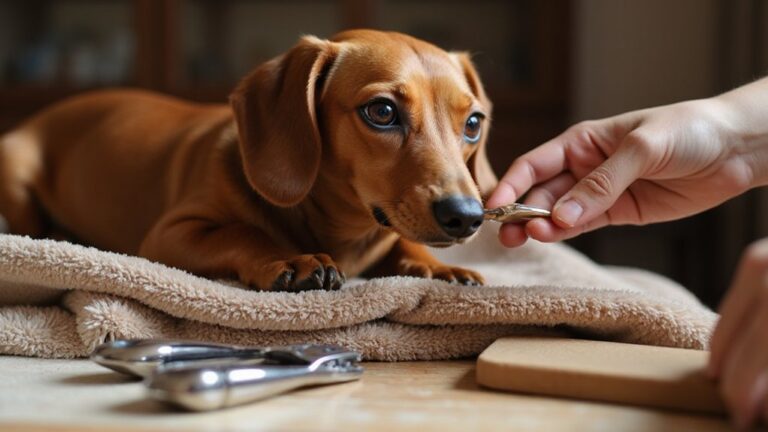
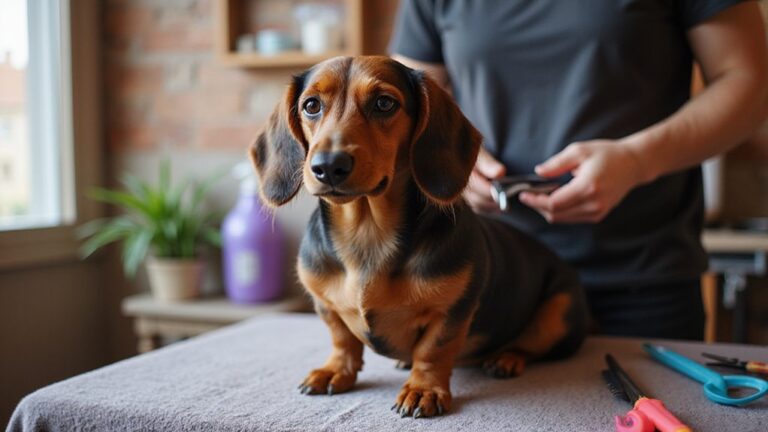
To keep your Dachshund smelling fresh, establishing a regular grooming routine is key. Start by brushing your pup’s coat at least once a week to remove loose hair and dirt. Pay special attention to their ears and paws, as these areas can trap odors. Regular nail trimming is also important, helping to prevent any buildup of bacteria. Additionally, check for any skin issues or irritations that could contribute to smell. Incorporating these practices into your routine not only keeps your Dachshund clean but also strengthens your bond and helps you spot any potential health issues early. Using the right brush for your Dachshund’s coat can enhance your grooming routine and make it more effective, especially if you choose one designed for the unique coat type of Dachshunds.
Choosing the Right Shampoo and Conditioners
Choosing the right shampoo and conditioner for your Dachshund can make a significant difference in managing doggie smell. Look for products specifically designed for dogs, as human shampoos can disrupt their skin’s pH balance. Opt for gentle, hypoallergenic formulas that won’t irritate their sensitive skin. Ingredients like oatmeal or aloe vera can soothe and moisturize. Avoid harsh chemicals and strong fragrances, which might mask odors but can cause more issues. Conditioning is just as important; it helps maintain a healthy coat and reduces matting. Always test new products on a small area to guarantee your pup doesn’t have an adverse reaction. Additionally, using dog-specific shampoos can ensure that your pet receives the best care tailored to their needs.
Utilizing Deodorizing Products Effectively
While regular bathing is essential, utilizing deodorizing products effectively can further help keep your Dachshund smelling fresh. Look for sprays or wipes specifically designed for dogs, as they won’t irritate their skin. Apply these products after walks or playtime to neutralize odors quickly. Focus on areas prone to smell, like their ears and paws. Be mindful of the ingredients; natural options are often safer and gentler. You can also consider using a deodorizing dog shampoo during baths for lasting effects. Remember, moderation is key—overusing these products can lead to skin issues, so balance is essential for your pup’s health. Additionally, choosing the best dog shampoo for their specific needs can enhance their overall cleanliness and scent.
Maintaining Dental Hygiene for Fresh Breath
Maintaining dental hygiene is essential for keeping your Dachshund’s breath fresh, especially since bad breath can indicate underlying health issues. Regularly brushing their teeth with dog-specific toothpaste can prevent plaque buildup and reduce odors. Aim for at least two to three times a week, but daily brushing is ideal. Additionally, providing dental chews can help clean their teeth while satisfying their chewing instincts. Don’t forget to schedule regular veterinary dental check-ups to catch any potential issues early. By prioritizing your pup’s dental care, you’ll not only guarantee fresh breath but also promote overall health and well-being. Incorporating best slow feeder dog bowls can also help reduce the chances of digestive issues, which can contribute to bad breath.
Cleaning Your Dachshund’s Living Environment
A clean living environment plays a significant role in managing doggie smell in your Dachshund. Regularly vacuuming and sweeping can help remove fur, dander, and debris that contribute to odor. Wash your dog’s bedding, toys, and any blankets frequently to eliminate lingering smells. Also, consider using pet-safe disinfectants to clean surfaces where your Dachshund spends time. Airing out the space by opening windows can improve ventilation and reduce odors. Finally, keep an eye on any hidden messes, like accidents in corners, which can cause unpleasant smells if left unchecked. A tidy home helps keep your Dachshund smelling fresh! Additionally, choosing cozy beds for Dachshunds that are easy to clean can further enhance their comfort and hygiene.
Monitoring Diet and Nutrition for Skin Health
Since diet plays a crucial role in your Dachshund’s overall skin health, monitoring what they eat can help reduce odors and improve their coat. Focus on high-quality dog food rich in omega fatty acids, which promote skin hydration and a shiny coat. Avoid fillers and artificial additives that can trigger skin sensitivities. Incorporating fruits and vegetables, like sweet potatoes and carrots, can provide essential vitamins. Additionally, consider supplements like fish oil for extra skin support. It’s important to choose dog food that is specifically formulated for small dog breeds, as their nutritional needs can differ from larger dogs. Always consult your vet before making dietary changes, ensuring your Dachshund gets the balanced nutrition they need to thrive and smell fresh.
Frequently Asked Questions
How Often Should I Take My Dachshund to the Groomer?
You should take your dachshund to the groomer every 4 to 6 weeks. Regular grooming helps maintain their coat and skin health, reducing odors and keeping them looking and feeling their best between baths.
Can Certain Breeds Have More Odor Than Others?
Yes, certain breeds can have more odor due to factors like skin type, coat density, and oil production. Regular grooming and proper hygiene can help minimize smells in any breed, including your dachshund.
What Natural Remedies Help Reduce Dog Odor?
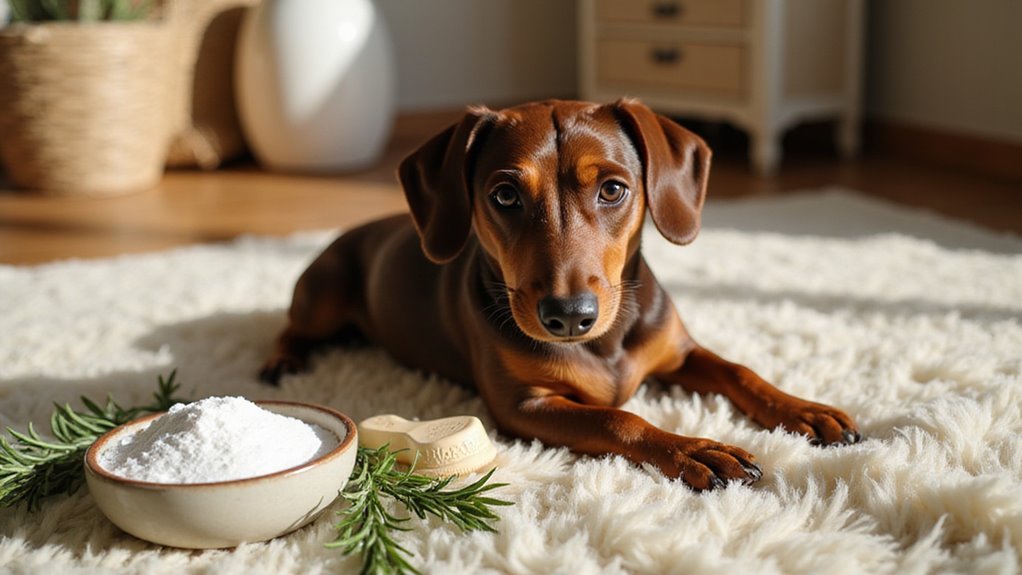
You can use natural remedies like apple cider vinegar, baking soda, or essential oils diluted in water to reduce dog odor. Regular brushing and maintaining a clean environment also help keep smells at bay.
Are There Specific Foods That Cause Increased Odor in Dogs?
Certain foods, like those high in protein or fat, can lead to increased odor in dogs. You might notice that some grains and artificial ingredients can also contribute to unpleasant smells. Consider adjusting your dog’s diet accordingly.
How Can I Tell if My Dog’s Smell Is a Health Issue?
If your dog’s smell suddenly worsens, it could indicate a health issue. Look for signs like skin irritation, changes in appetite, or unusual behavior. It’s best to consult your vet for proper diagnosis and treatment.