Introducing Your Dachshund Puppy to an Older Dog
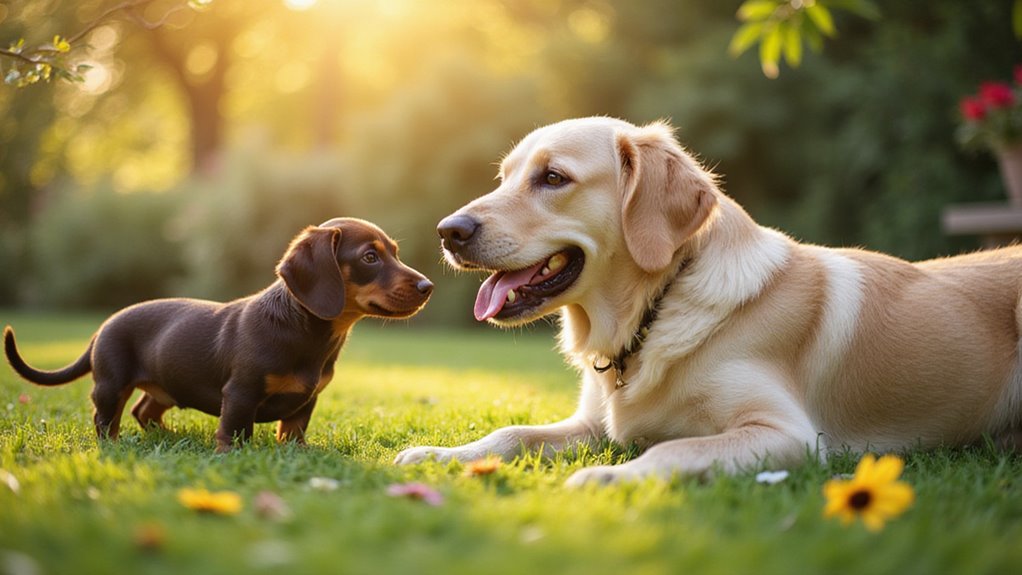
Introducing your dachshund puppy to an older dog can be a delicate process. It’s important to reflect on the older dog’s temperament and energy levels before making any introductions. You’ll want to create a comfortable environment for both dogs. How you handle the initial meeting can set the tone for their future relationship. Let’s explore some key steps to guarantee a smooth changeover for everyone involved.
The Essentials
- Observe the older dog’s temperament and reactions to puppies to gauge compatibility before introduction.
- Set up a safe space for both dogs, with separate areas and retreat options to minimize stress.
- Introduce the dogs in a neutral location, allowing them to approach each other at their own pace.
- Supervise initial interactions closely, rewarding calm behavior and redirecting focus if tension arises.
- Establish separate spaces for each dog to ensure comfort and prevent territorial disputes during the adjustment period.
Assessing Your Older Dog’s Temperament
Before you introduce your dachshund puppy to your older dog, it’s crucial to assess your older dog’s temperament. Observe how your dog reacts to other animals, especially puppies. Is your dog friendly and playful, or does it show signs of aggression or anxiety? Look for signs of stress, such as growling, stiff body language, or hiding. It’s also important to evaluate their energy level; an active dog may not mesh well with a more laid-back companion. Understanding these traits will help you gauge if your older dog is ready for a new friend and set the stage for a successful introduction. Additionally, consider how your older dog responds to different dog breeds, as this may influence their comfort level with a dachshund puppy.
Preparing Your Home for the New Arrival
Creating a welcoming environment for your new dachshund puppy is essential for a smooth changeover. Start by setting up a designated space with a cozy bed, food and water bowls, and some toys. Remove any hazards like toxic plants or small objects that could be swallowed. Make certain your older dog has a safe retreat where they can escape if needed. Consider using baby gates to create separate areas initially. Stock up on puppy supplies, like a leash and collar, to make outings easier. Finally, prepare your family by discussing boundaries and responsibilities for the new puppy’s care. Providing a cozy dog bed can help your dachshund puppy feel secure and comfortable in their new home.
The Initial Meeting: First Impressions Matter
When introducing your dachshund puppy to an older dog, it is important to make that initial meeting as calm and positive as possible. Find a neutral space where neither dog feels territorial. Keep your puppy on a leash while you allow the older dog to approach at their own pace. Watch their body language closely; signs of stress or aggression should be addressed immediately. Use treats and praise to create a positive association for both dogs. Remember to keep the atmosphere relaxed, as first impressions can set the tone for their future relationship. A smooth introduction can lead to lasting companionship. Additionally, consider having a best ramp for dachshund available to facilitate safe and easy access to spaces for both dogs during their interactions.
Supervised Interactions: Building Trust
As you facilitate interactions between your dachshund puppy and the older dog, it’s crucial to supervise their time together to foster trust. Keep a close eye on their body language; look for signs of comfort or stress. Allow them to explore each other at their own pace, rewarding calm behavior with treats and praise. If tension arises, step in gently, redirecting their focus to a toy or a game. Regular, positive experiences will help them build a bond. Remember, patience is key—every dog is unique, and it may take time for both to feel secure and relaxed around each other. Additionally, providing best dachshund gifts can create a positive environment that encourages interaction and play between them.
Establishing Separate Spaces for Each Dog
To guarantee a smooth shift for both your dachshund puppy and the older dog, it’s important to establish separate spaces for each. Create designated areas where they can feel safe and comfortable. This could be a crate or a specific room with their favorite toys and bedding. Make sure each space has access to water and necessary supplies. Encourage your older dog to relax in their area, while giving the puppy a chance to explore theirs. This separation helps prevent territorial disputes and allows both dogs to acclimate at their own pace, fostering a more harmonious environment in your home. Additionally, consider investing in a comfortable dog bed that suits the needs of each dog, as this can enhance their individual spaces further.
Monitoring Playtime and Socialization
While it’s exciting to watch your dachshund puppy and older dog interact, keeping a close eye on their playtime and socialization is essential for guaranteeing safety and comfort. Observe their body language; signs of stress or aggression, like growling or stiff postures, shouldn’t be ignored. If playtime gets too rough, intervene gently and redirect their energy. Encourage positive interactions by rewarding calm behavior with treats or praise. Monitor their play sessions to guarantee both dogs feel secure. Remember, it’s a learning experience for both, and your guidance will help them build a strong bond while respecting each other’s boundaries. Additionally, providing dachshund-friendly toys can help create a more enjoyable play environment for both dogs.
Gradually Increasing Freedom and Interaction
Once you’ve established a solid foundation of trust between your dachshund puppy and older dog, it’s time to gradually increase their freedom and interaction. Start by allowing them to explore shared spaces together while supervised. Monitor their body language for signs of comfort or stress. Gradually extend their time together, giving them opportunities to engage in play or simply relax side by side. You can introduce toys or treats to encourage positive interactions. Additionally, providing essential dog steps can help your dachshund navigate different environments safely. Remember, this process takes time; be patient and adjust based on their reactions. The goal is to foster a harmonious relationship that feels safe for both dogs.
Frequently Asked Questions
How Do I Choose the Right Time to Introduce Them?
You should choose a calm, neutral time when neither dog is stressed or overly excited. Early mornings or quiet evenings work well, ensuring both dogs feel comfortable and safe during their initial meeting.
What Toys Are Safe for Both Dogs?
Choose toys that are durable, non-toxic, and the right size for both dogs. Soft, rubber toys, and plush items without small parts are great options. Always supervise playtime to guarantee safety for both pets.
Can My Older Dog Get Jealous of the Puppy?
Yes, your older dog can get jealous of the puppy. It’s important to give both dogs equal attention and affection, ensuring your older dog feels secure and valued during the adjustment period.
How Long Will It Take for Them to Bond?
It can take anywhere from a few days to several weeks for them to bond. Patience is key, so give them time to adjust, and encourage positive interactions to help strengthen their relationship.
What Signs Indicate My Older Dog Is Stressed?
If your older dog’s ears are back, tail is tucked, or they’re panting excessively, they might be stressed. Watch for avoidance behaviors or growling; these are clear signs they need some space or reassurance.