Red Flags When Buying a Dachshund Puppy (Signs of Bad Breeding)
When you’re considering bringing a Dachshund puppy into your home, it’s crucial to be aware of potential red flags that signal poor breeding practices. From health testing for parent dogs to the living conditions of the puppies, each detail can reveal a lot about the breeder’s commitment to their dogs. Understanding these signs can help you avoid heartache down the road. But what specific indicators should you watch for?
The Essentials
- Lack of health testing for parent dogs can lead to genetic disorders in puppies, such as hip dysplasia.
- Unsanitary living conditions, including overcrowding and foul odors, indicate poor breeding practices.
- Puppies that show signs of limited socialization may develop fearfulness or aggression.
- Breeders who are unwilling to share references or health clearances may be hiding issues.
- A high volume of litters produced each year suggests a focus on quantity over the health of the puppies.
Lack of Health Testing for Parent Dogs
When considering a Dachshund puppy, one crucial red flag is the lack of health testing for the parent dogs. Without these tests, you can’t be sure that the puppies are free from genetic conditions like hip dysplasia or intervertebral disc disease. Responsible breeders prioritize health screening to guarantee they’re producing strong, healthy puppies. If the seller can’t provide health clearances or documentation, it’s a warning sign. You deserve a puppy that’s been bred with care and consideration for its wellbeing. Always ask for proof of health testing to protect yourself and assure you’re bringing home a happy, healthy companion. Additionally, consider that choosing the perfect collar can also impact your puppy’s overall health and comfort as they grow.
Poor Living Conditions and Unsanitary Environment
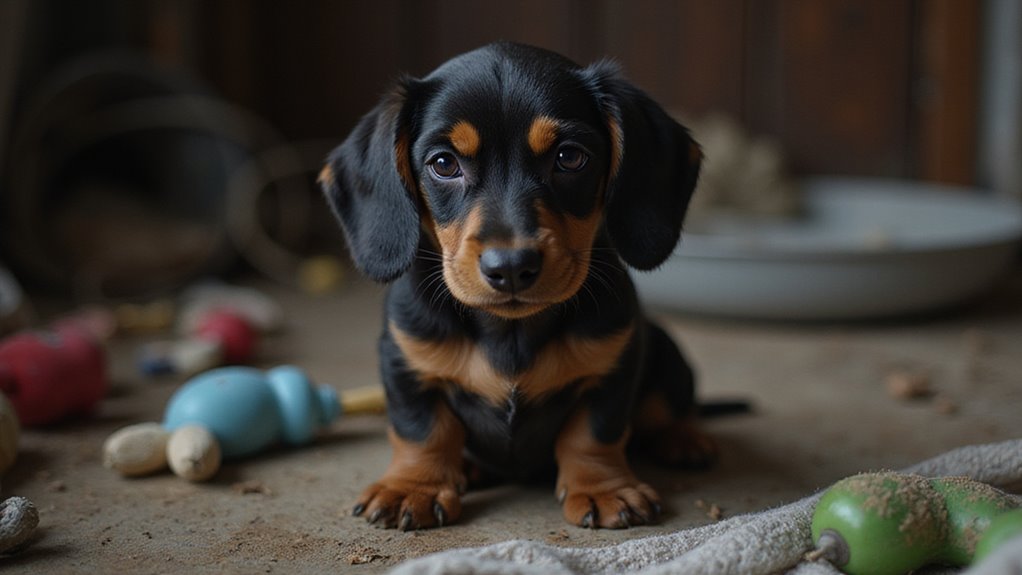
While you may be excited about bringing a Dachshund puppy home, it’s essential to pay attention to the living conditions where the puppies are raised. If you notice overcrowded spaces, foul odors, or dirty bedding, these are significant red flags. Puppies should have clean, spacious areas to play and grow. Unsanitary environments can lead to health issues and indicate a breeder’s negligence. Look for proper ventilation, cleanliness, and a safe atmosphere. If the conditions seem poor, it’s best to walk away. You deserve a healthy puppy from a responsible breeder who prioritizes the well-being of their dogs. Additionally, reputable breeders often provide proper dog crates to ensure the safety and comfort of their puppies.
Limited or No Socialization of Puppies
A puppy’s early experiences shape its behavior and temperament, making socialization an essential part of its development. If a breeder limits or skips socialization, your Dachshund might grow up fearful, aggressive, or overly timid. Look for signs that puppies have been exposed to various people, pets, and environments. If the breeder keeps them isolated or doesn’t encourage interaction, it’s a red flag. A well-socialized puppy will be more adaptable and confident, helping you avoid future behavioral issues. Ask how the breeder socializes their puppies and observe their interactions to guarantee you’re bringing home a well-adjusted companion. Additionally, providing Dachshund-friendly toys can enhance socialization by encouraging play and interaction with others.
Unwillingness to Provide References or Documentation
How can you trust a breeder who’s reluctant to provide references or documentation? If they won’t share information about previous litters, health clearances, or client testimonials, it raises a red flag. A reputable breeder should be proud of their work and willing to show you proof of good practices. Without this transparency, you might be dealing with a backyard breeder or someone who doesn’t prioritize the well-being of their dogs. Always ask for references from previous buyers and don’t hesitate to contact them. Your future Dachshund deserves a responsible breeder who stands behind their puppies and their breeding practices. Additionally, responsible breeders often have a commitment to health testing their dogs, which is crucial for ensuring the overall health of the puppies.
Signs of Genetic Disorders in the Litter
What should you look for when evaluating the health of a Dachshund puppy litter? First, observe the puppies’ physical traits. Look for any abnormalities, like a crooked spine or unusual gait, which could signal genetic issues. Pay attention to their eyes; clear, bright eyes are a good sign, while cloudy or weepy eyes may indicate problems. Listen for any coughing or wheezing, as respiratory issues can be hereditary. Additionally, inquire about the parents’ health histories. If the breeder hesitates or avoids discussing genetic disorders in the lineage, it’s a red flag. Healthy puppies should show no signs of distress or illness. Furthermore, ensure that the breeder is knowledgeable about the best brush for Dachshund, as proper grooming can help maintain their overall health.
Overbreeding and High Volume of Litters
While it may be tempting to choose a puppy from a breeder with multiple litters, overbreeding can lead to serious health issues for the dogs. Breeders who prioritize quantity over quality often neglect the well-being of their animals. Puppies from such environments may face genetic disorders, behavioral problems, and socialization issues. It’s essential to ask how many litters the breeder produces each year. A responsible breeder should have limited litters, focusing on health and temperament. If you notice an overwhelming number of litters, it’s a red flag that you should consider looking elsewhere for your Dachshund puppy. Additionally, overbreeding can result in poor genetic health that negatively impacts the breed’s overall longevity and quality of life.
Inconsistent or Untrustworthy Breeder Communication
Is the breeder responsive and transparent in their communication? If you notice inconsistencies in their answers or they’re hard to reach, that’s a major red flag. Trustworthy breeders should be open about their practices and willing to share health clearances, lineage, and any concerns. If they avoid your questions or seem defensive, it’s time to reconsider. A good breeder will encourage visits, provide updates, and be available for any concerns. Don’t ignore communication patterns; they reflect the breeder’s commitment to ethical practices. Your Dachshund’s well-being starts with you choosing the right breeder. Trust your instincts—communication is key! Additionally, reputable breeders often offer best dachshund gifts as a sign of their dedication to the breed and their customers.
Frequently Asked Questions
What Are Common Signs of a Reputable Dachshund Breeder?
A reputable dachshund breeder will provide health clearances, prioritize socialization, and maintain clean living conditions. They’ll encourage you to meet the puppies’ parents and ask about your experience, ensuring a good match for you and your family.
How Can I Find a Responsible Breeder Near Me?
To find a responsible breeder near you, search online for breed clubs, use social media groups, or ask local veterinarians for recommendations. Visiting dog shows can also connect you with reputable breeders in your area.
What Health Issues Are Common in Dachshunds?
Dachshunds often face health issues like intervertebral disc disease, obesity, dental problems, and skin allergies. Regular vet check-ups and a balanced diet can help you manage these concerns effectively and keep your furry friend healthy.
How Much Should I Expect to Pay for a Dachshund Puppy?
You should expect to pay between $500 and $3,000 for a Dachshund puppy, depending on factors like breeder reputation, lineage, and location. It is crucial to invest in a healthy, well-bred pup for long-term happiness.
What Should I Ask During a Breeder Interview?
During a breeder interview, ask about health screenings, the puppy’s parents’ temperaments, socialization practices, and the breeder’s experience. You should also inquire about return policies and any guarantees regarding the puppy’s health.