
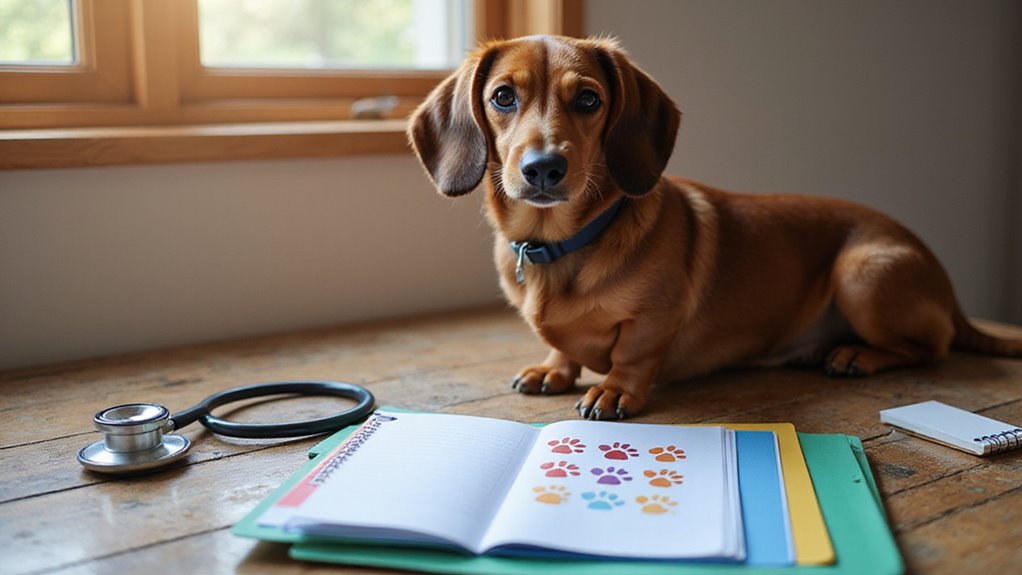
How to Create a Health Record Folder for Your Dachshund
Creating a health record folder for your Dachshund is a practical step that can make a significant difference in their care. You’ll want to gather the right materials first and organize everything systematically. This not only helps you track important information but also guarantees that you’re prepared for vet visits or emergencies. Knowing what sections to include is essential, and there are a few key elements you shouldn’t overlook.
The Essentials
- Gather materials like a binder, dividers, and plastic sleeves to organize your Dachshund’s health records effectively.
- Create a section for basic information, including your pup’s name, breed, age, and contact details.
- Organize vaccination records with clear headings for each vaccine and keep track of dates and veterinarian information.
- Document medical history, including previous illnesses, treatments, and allergies, to assist your vet with care decisions.
- Include emergency contacts for your veterinarian, animal hospitals, and trusted friends to ensure quick access in case of emergencies.
Gather Necessary Materials
To create a health record folder for your Dachshund, you’ll need just a few essential materials. Start with a sturdy binder or folder to keep everything organized. You’ll also want some dividers to separate different sections, making it easy to find what you need. Grab a few sheets of blank paper for notes and records, and don’t forget some plastic sleeves to protect important documents, like vaccination records and health certificates. A pen or marker will help you label each section clearly. With these materials, you’ll be well on your way to keeping your pup’s health information organized and accessible. Additionally, consider including information on best dog beds for dachshunds to ensure your pet is comfortable during recovery or routine check-ups.
Create a Section for Basic Information
Once you have your materials ready, it’s time to create a section for basic information about your Dachshund. Start by including your pup’s name, breed, and age. Don’t forget to note their weight and any distinguishing features, like color or markings. Next, add your contact information, including your phone number and address, so anyone can reach you in case of emergencies. You might also want to list your Dachshund’s favorite toys or activities, which can help caregivers understand their personality. Additionally, consider including best Dachshund gifts that your pup enjoys, as this can provide insight into their preferences. Keeping this section organized and up-to-date guarantees you have all essential information at your fingertips when needed.
Organize Vaccination Records
Organizing vaccination records is essential for your Dachshund’s health and well-being. Start by gathering all vaccination certificates and documents from your vet. Create a dedicated section in your health record folder specifically for these records. Use clear headings for each vaccine, like rabies, parvovirus, and distemper. Include the date of each vaccination, the next due date, and the veterinarian’s name. You might also want to add any booster shots needed. Keeping these records up-to-date guarantees you’ll have the information ready for vet visits, boarding, or traveling. Regularly check and update this section to maintain accurate records. Additionally, consider including gifts for dachshund lovers that may help you remember vaccination dates.
Document Medical History
While keeping track of your Dachshund’s medical history may seem intimidating, it’s essential for ensuring their overall health. Start by documenting any previous illnesses, surgeries, or chronic conditions. Note down the dates, treatments, and outcomes. Keep track of medications prescribed, including dosages and duration. If your pup has allergies, record those as well. Be sure to include any significant behavioral changes or reactions to treatments. Consistently updating this information helps your veterinarian provide the best care possible. With a thorough medical history, you’ll be better prepared for vet visits and can quickly address any health concerns that arise. Additionally, including best treats for Dachshunds in your records can help monitor any dietary reactions or allergies.
Include Emergency Contacts
In addition to documenting your Dachshund’s medical history, it’s important to include emergency contacts in their health record folder. Start by listing your veterinarian’s name, phone number, and address, guaranteeing you’re prepared for any urgent situation. Next, add the contact information for a nearby animal hospital that operates after hours. Don’t forget to include a trusted friend or family member who can help in case you’re unavailable. Having these contacts easily accessible can make a significant difference during emergencies. Regularly update this section to guarantee all information is current and accurate, giving you peace of mind when it matters most. Additionally, consider including details about your Dachshund’s car seat safety to ensure their protection while traveling.
Keep Track of Medications
Keeping track of your Dachshund’s medications is essential for their health and well-being. Start by creating a dedicated section in their health record folder. List each medication’s name, dosage, frequency, and the prescribing veterinarian’s contact information. You should also note any side effects you’ve observed, as this can help your vet make informed adjustments. Use a calendar or reminder app to track when medications need to be given, ensuring you never miss a dose. By staying organized, you’ll provide the best care for your furry friend and maintain their overall health throughout their life. Additionally, consider incorporating delicious treats as a reward for taking their medications, making the experience more positive for your Dachshund.
Regularly Update the Folder
Updating your Dachshund’s health record folder regularly is essential for effective care. Make it a habit to add any new vet visits, vaccination updates, or health changes. It’s easy to overlook these details, but they play a significant role in your pup’s health management. Whenever your Dachshund gets a new medication or experiences a health issue, document it immediately. This way, you’ll have all the information handy for future vet appointments. Plus, maintaining an up-to-date folder helps you track trends in their health, ensuring you’re always prepared to provide the best care possible for your furry friend. Additionally, keeping records of your Dachshund’s grooming needs, such as the best brush for Dachshund grooming products, can further enhance their overall health and well-being.
Frequently Asked Questions
What Size Folder Is Best for a Dachshund’s Health Records?
A standard-sized folder, like a letter-sized (8.5 x 11 inches), works best for your dachshund’s health records. It provides enough space for all documents while being easily manageable and fitting into most filing systems.
How Often Should I Review My Dachshund’s Health Records?
You should review your dachshund’s health records regularly—ideally every six months. This keeps you updated on vaccinations, vet visits, and any changes in health, ensuring your pup gets the best care possible.
Can I Store Digital Copies of Health Records?
Yes, you can store digital copies of health records. It’s convenient and space-saving. Just guarantee they’re securely backed up and easily accessible for vet visits or emergencies, so you’re always prepared for your dachshund’s needs.
What Should I Do if My Dachshund Has a New Diagnosis?
If your dachshund has a new diagnosis, discuss treatment options with your vet, update their health records, and monitor any changes. Keeping a close eye on their condition can help guarantee their well-being.
Are There Specific Health Concerns for Dachshunds to Note?
Yes, dachshunds are prone to specific health concerns like intervertebral disc disease, obesity, dental issues, and skin allergies. It’s important to monitor these conditions and consult your vet regularly for proper care and management.