
How Often Should Dachshunds Visit the Vet? Routine Check-Up Guide
As a Dachshund owner, you might wonder how often your furry friend should visit the vet. Regular check-ups play a vital role in maintaining their health throughout their life stages. From puppyhood to their golden years, each phase requires different attention and care. Understanding these needs can help you keep your Dachshund healthy and happy. Let’s explore the recommended visit frequency based on age and what you can expect during these important appointments.
The Essentials
- Puppies need vet visits every 3-4 weeks until 16 weeks old to ensure healthy growth and vaccinations.
- Adult Dachshunds should have a yearly check-up to monitor overall health and prevent issues.
- Senior Dachshunds (7 years and older) benefit from biannual visits to catch age-related health concerns early.
- Routine check-ups include monitoring weight, dental health, and discussing any behavioral changes with the vet.
- Staying up-to-date on vaccinations during vet visits protects your Dachshund from serious illnesses.
Importance of Routine Check-Ups for Dachshunds
While you might think your Dachshund is healthy, routine check-ups are essential for spotting potential health issues early. These visits allow your vet to monitor your dog’s weight, dental health, and overall condition. Regular exams can help identify common Dachshund problems like intervertebral disc disease or obesity before they become serious. You’ll also have the chance to discuss any behavioral changes or concerns. Plus, vaccines and preventive treatments can be updated during these appointments, ensuring your furry friend stays protected. Prioritizing routine check-ups helps you maintain your Dachshund’s well-being and can lead to a longer, happier life together. Additionally, selecting the right dog bed type improves their comfort and supports their health during the recovery process.
Recommended Check-Up Frequency by Age
As a general guideline, the frequency of vet check-ups for your Dachshund should vary based on their age. For puppies, you should schedule visits every 3-4 weeks until they’re about 16 weeks old. Once they reach adulthood, a yearly check-up is typically sufficient. However, if your Dachshund is a senior (around 7 years or older), consider biannual visits to monitor their health more closely. Regular check-ups can help catch potential health issues early, ensuring your furry friend stays happy and healthy. Providing a cozy bed can also improve your Dachshund’s overall comfort and well-being, especially as they age. Tailoring your vet visits according to their age can make a significant difference in their overall well-being.
What to Expect During a Vet Visit
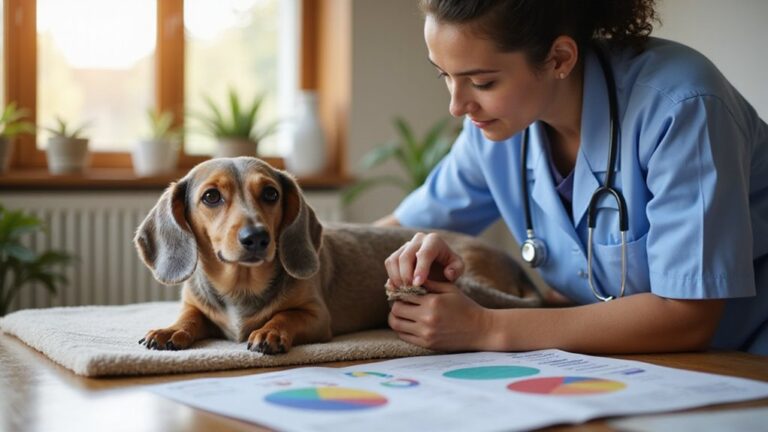
When you take your Dachshund to the vet, you can expect a thorough examination that covers various aspects of their health. The vet will check their weight, coat condition, and skin for any issues. They’ll also listen to your pup’s heart and lungs, guaranteeing everything sounds normal. Expect questions about your Dachshund’s diet, behavior, and any concerns you might have noticed. Vaccinations and preventive care will likely be discussed, too. If your Dachshund requires tests, like blood work or x-rays, the vet will explain the process and its importance. Overall, it’s a great opportunity to guarantee your furry friend stays healthy! Additionally, you might want to inquire about slow feeders as they can help manage your dog’s eating habits.
Common Health Issues in Dachshunds
Dachshunds are prone to certain health issues that every owner should be aware of. One major concern is intervertebral disc disease (IVDD), which affects their long spines. You might also notice them struggling with obesity, so it’s important to manage their diet and exercise. Dental problems can arise as well, so regular teeth cleaning is essential. Additionally, watch for skin issues, such as allergies or hot spots. Eye conditions, like cataracts and progressive retinal atrophy, can occur too. By staying informed about these potential problems, you can help keep your Dachshund healthy and happy for years to come. Providing delicious treats that support their health can also contribute to their overall well-being.
Vaccination Schedule for Your Dachshund
To guarantee your Dachshund stays healthy, keeping up with their vaccination schedule is essential. Puppies typically receive their first vaccinations at 6-8 weeks, followed by boosters every 3-4 weeks until they’re about 16 weeks old. Core vaccines include distemper, parvovirus, and rabies. After the initial series, adult Dachshunds need boosters every 1-3 years, depending on the vaccine type and your vet’s advice. Don’t forget to ask about any optional vaccines based on your dog’s lifestyle, such as those for kennel cough or Lyme disease. Staying on top of vaccinations helps protect your furry friend from serious illnesses. Additionally, choosing the right food can play a crucial role in supporting your dog’s immune system during this time.
Dental Care and Grooming Considerations
Keeping your Dachshund healthy goes beyond vaccinations; dental care and grooming play an essential role too. Regularly brushing your pup’s teeth can prevent dental diseases, and aim for at least two to three times a week. Don’t forget to check their breath and gums; any unusual signs could indicate issues. For grooming, consider their coat type; long-haired Dachshunds need frequent brushing to avoid mats, while short-haired ones require less maintenance. Regular baths will keep their skin healthy, and don’t overlook nail trimming. By staying on top of dental and grooming needs, you’ll help guarantee a happy, healthy life for your furry friend. Additionally, using the appropriate brush can enhance the grooming experience and keep their coat in optimal condition.
Signs Your Dachshund Needs to See the Vet Sooner
How can you tell if your Dachshund needs to see the vet sooner rather than later? Keep an eye out for signs like persistent vomiting, diarrhea, or lethargy. If your pup’s appetite suddenly drops or they’re drinking excessive water, it’s time to act. Watch for difficulty breathing, coughing, or unusual behavior—these could signal serious issues. Also, if you notice swelling, limping, or any changes in their coat or skin, don’t hesitate. Early intervention can make a huge difference in your Dachshund’s health, so trust your instincts and get them checked out if something seems off. Additionally, providing your Dachshund with dachshund-friendly toys can help keep them mentally stimulated and physically active, which can contribute to their overall well-being.
Frequently Asked Questions
How Can I Choose the Right Veterinarian for My Dachshund?
To choose the right veterinarian for your dachshund, consider their experience with the breed, ask for recommendations, visit the clinic, and guarantee they’re compassionate and communicative. Trust your instincts; your pet’s comfort matters most.
What Should I Bring to My Dachshund’s Vet Appointment?
You should bring your dachshund’s medical records, any medications, a list of questions or concerns, and a sample of their stool if needed. Don’t forget to bring a leash or carrier for safety.
How Can I Prepare My Dachshund for a Vet Visit?
To prepare your dachshund for a vet visit, keep their routine consistent, bring familiar items like a favorite toy, and make certain they’re comfortable. Also, try to remain calm, as they’ll sense your emotions.
Are There Any Specific Health Screenings Recommended for Dachshunds?
Yes, for dachshunds, specific health screenings like hip evaluations, spinal assessments, and eye tests are recommended. Regular checks help catch potential issues early, ensuring your furry friend stays healthy and happy throughout their life.
What Are the Costs Associated With Routine Vet Visits for Dachshunds?
Routine vet visits for dachshunds can cost between $50 to $150, depending on services like vaccinations, examinations, and tests. You should budget for these expenses to guarantee your pup stays healthy and happy.