
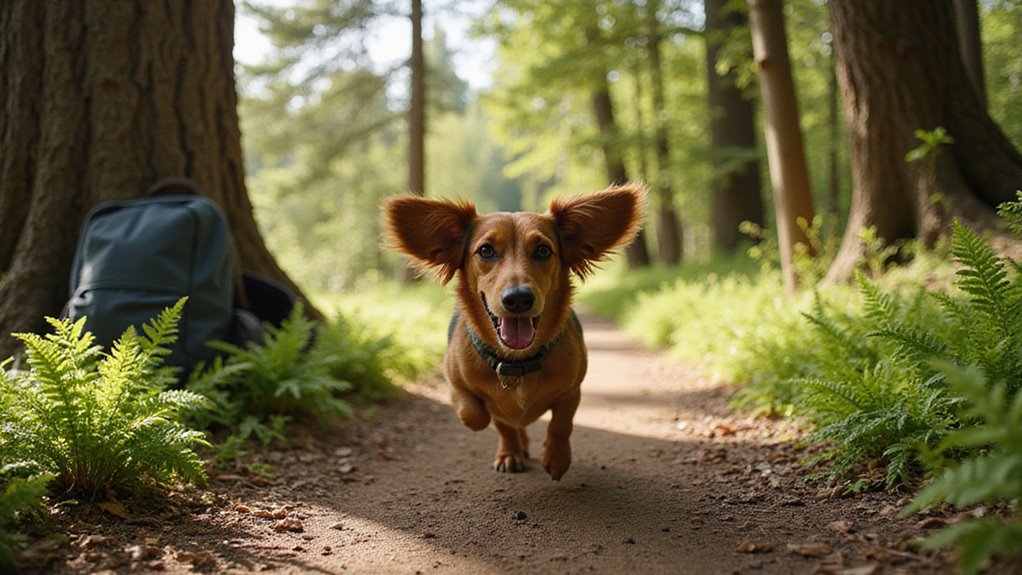
Hiking With Dachshunds: How Far Is Too Far?
When you take your dachshund on a hike, it’s essential to understand their unique physical limitations. Their long backs and short legs can make even moderate trails challenging. How far can they really go without overexerting themselves? Factors like age, health, and trail conditions play a significant role. Let’s explore what you need to know to guarantee that both you and your furry companion have a safe and enjoyable adventure outdoors.
The Essentials
- Dachshunds’ stamina is lower than larger breeds, so limit hikes to 1-2 miles depending on their fitness level.
- Avoid steep or rocky trails to prevent spinal strain; opt for flatter, well-maintained paths.
- Regular breaks are essential; watch for signs of fatigue like excessive panting or lagging behind.
- Weather conditions greatly affect hiking distance; avoid extreme temperatures to keep your dachshund comfortable.
- Always assess your dachshund’s health and age before planning the hike to ensure safety.
Understanding Your Dachshund’s Physical Limitations
When you take your dachshund on a hike, it’s vital to understand their physical limitations, especially since they have long backs and short legs. These characteristics make them more susceptible to injury, particularly in rough terrain. You should avoid steep or rocky trails that could strain their spine. Also, keep an eye on your pup’s energy levels; dachshunds can tire quickly. Regular breaks are important to let them rest and hydrate. Remember, their stamina isn’t the same as larger breeds. By being mindful of these factors, you can guarantee a safe and enjoyable hiking experience for both of you. Additionally, using dog steps designed for dachshunds can help them navigate tricky terrain more safely.
Factors Influencing Hiking Distance
While planning your hike with a dachshund, several factors can influence the distance you can comfortably cover. First, consider your dog’s age and health; a younger, active dachshund may trek further than an older one with joint issues. Weather conditions also play an essential role; extreme heat or cold can limit your hiking time. The terrain matters too; rocky or steep paths can tire your dog faster. Finally, take into account your own stamina and pace. Regular breaks for hydration and rest will help guarantee both you and your furry friend enjoy the adventure without overexerting yourselves. Additionally, providing a cozy bed for your dachshund to rest in after the hike can enhance their recovery and comfort, especially if it’s a best dog bed for dachshunds.
Preparing for the Hike
Before you hit the trail, it’s crucial to gather the right gear and supplies for both you and your dachshund. Start with a sturdy leash and a comfortable harness to guarantee your pup’s safety. Bring plenty of water and a collapsible bowl to keep them hydrated. Pack some dog-friendly snacks to keep their energy up. Don’t forget a first-aid kit for both of you, just in case. Wear appropriate footwear and clothing for the weather, and consider a small backpack for essentials. Finally, check your dachshund’s health and fitness level to confirm they’re ready for the adventure ahead. Additionally, consider using dog steps to help your dachshund navigate any tricky terrain or obstacles they may encounter on the hike.
Choosing the Right Trail
Choosing the right trail is essential for a successful hike with your dachshund, as it guarantees both safety and enjoyment for you both. Look for trails that are well-maintained and avoid overly steep or rocky terrain, as dachshunds can struggle with challenging paths. Ideally, opt for shorter, flatter routes that allow for frequent breaks. Check the trail’s length and difficulty level to confirm it suits your pup’s stamina. Additionally, consider the weather and time of day; cooler temperatures are better for your dachshund’s comfort. Ultimately, a suitable trail will ensure a fun and memorable experience for both of you. For added safety, consider bringing along a ramp for your dachshund to assist with any elevation changes.
Signs Your Dachshund Needs a Break
Recognizing when your dachshund needs a break is essential for keeping your hike enjoyable and safe. Watch for signs like excessive panting, lagging behind, or a reluctance to continue. If your pup starts to lie down or seems unsteady on their feet, it’s time to pause. You might also notice them drooling more than usual or seeking shade. Pay attention to their body language; a wagging tail can turn into a droop when they’re tired. Remember, it’s better to take a short break now than to push them too far and risk injury or exhaustion later on. Additionally, providing dachshund-friendly toys during breaks can help keep them entertained and happy.
Hydration and Nutrition on the Trail
After guaranteeing your dachshund gets the breaks they need, it’s important to focus on keeping them well-hydrated and nourished while on the trail. Bring plenty of fresh water in a portable bowl, offering it frequently, especially on warm days. Pack high-quality, lightweight snacks like dog-friendly jerky or kibble to maintain their energy. You can also consider dog-friendly treats to keep their spirits up. Additionally, treats your dachshund will love can be a great way to reward them during breaks. Monitor your pup for signs of dehydration, like excessive panting or lethargy. Remember, a well-fed and hydrated dachshund is a happy hiker, and it’ll help guarantee both of you enjoy the adventure!
Post-Hike Care for Your Dachshund
Once you’ve returned home from your hike, it’s essential to give your dachshund some extra care to help them recover from the adventure. Start by providing fresh water and a light meal to replenish their energy. Check their paws for any cuts or irritations from rough terrain. A gentle rub down will help soothe sore muscles and improve circulation. If they seem tired, let them rest in a cozy spot. Don’t forget to monitor for any signs of discomfort or injury. Finally, a little love and attention will reinforce your bond and help them feel secure after the hike. Additionally, offering some delicious treats can further help in rewarding their efforts and keeping their spirits high.
Frequently Asked Questions
Can Dachshunds Handle Steep or Rocky Trails?
Dachshunds can struggle on steep or rocky trails due to their short legs and long bodies. You’ll want to choose gentler paths, ensuring their safety and comfort while enjoying your outdoor adventures together.
How Can I Motivate My Dachshund to Keep Hiking?
To motivate your dachshund, use treats and praise during breaks. Keep the pace enjoyable, and incorporate fun activities, like exploring new scents. Make sure to stay patient; positive reinforcement will keep them excited to hike.
What Gear Is Best for Dachshund Hiking?
For dachshund hiking, you’ll want a comfortable harness, sturdy leash, portable water bowl, and doggy backpack. Protective booties can help with rough terrain, while a lightweight dog first-aid kit guarantees you’re prepared for minor mishaps.
Are There Specific Trails Recommended for Dachshunds?
Yes, there are trails perfect for dachshunds. Look for shorter, flat paths with soft terrain. Parks and nature reserves often have dog-friendly trails, ensuring your pup enjoys the adventure without overexertion. Stay safe and have fun!
How Do I Socialize My Dachshund During Hikes?
To socialize your dachshund during hikes, encourage interactions with other dogs and people. Use treats as rewards, keep a calm demeanor, and allow your pup to explore at their own pace. It’ll build confidence and comfort.