
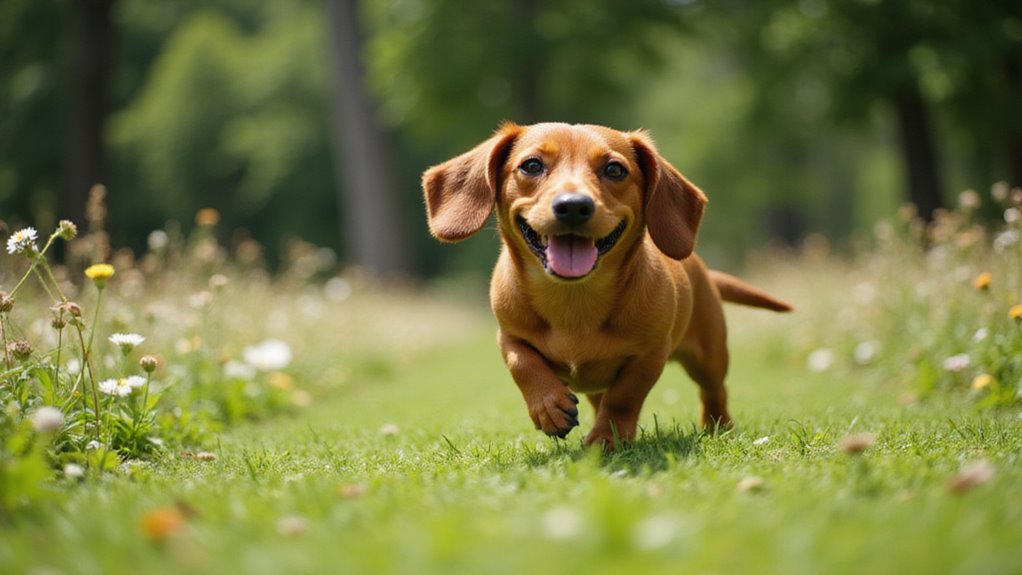
How Many Walks Does a Dachshund Really Need?
If you’re a Dachshund owner, you might wonder how many walks your furry friend really needs. These little dogs have unique energy levels that can vary greatly. Factors like age, health, and individual temperament all play a role in determining their exercise requirements. Understanding these nuances can help guarantee your Dachshund stays healthy and happy. So, what exactly should you consider to find the right balance for your pup?
The Essentials
- Adult Dachshunds typically require 30-60 minutes of exercise daily, divided into multiple walks.
- Energetic Dachshunds may need more frequent, longer walks to expend their energy.
- Puppies require vigorous playtime and longer walks to help manage their high energy levels.
- Senior Dachshunds may prefer shorter, gentler walks to accommodate their lower stamina.
- Regular walks, tailored to energy levels, are essential for maintaining a Dachshund’s overall health and happiness.
Understanding Dachshund Energy Levels
While you might picture Dachshunds as laid-back companions, they actually have varying energy levels that can surprise you. Some are content to lounge around, while others are more active and playful. You might find that your Dachshund loves to romp around the yard or chase after toys, showcasing their lively personality. It’s important to recognize your pup’s unique temperament, as a more energetic Dachshund will need regular exercise to stay happy and healthy. Understanding their energy levels will help you tailor their walking routine, ensuring they get the right amount of physical activity, keeping them mentally stimulated and physically fit. Additionally, providing them with Dachshund-friendly toys can enhance their playtime and encourage exercise.
Factors Influencing Walking Needs
Several factors can influence how much walking your Dachshund needs, so it’s essential to contemplate each one to create a suitable routine. First, consider your dog’s energy level; high-energy pups may require more exercise. Next, think about their health status; any existing conditions could limit their walking capacity. Additionally, your lifestyle plays a role; if you’re active, your Dachshund might enjoy longer walks. Finally, take into account the weather; extreme temperatures can affect how much exercise they can handle. Moreover, incorporating regular walks into their routine can enhance their overall well-being. Balancing these factors will help guarantee your Dachshund stays healthy, happy, and well-exercised.
Age and Exercise Requirements
As your Dachshund ages, their exercise needs change considerably. Puppies require more vigorous playtime and longer walks to burn off energy, while adult Dachshunds usually thrive on 30-60 minutes of exercise daily. As they reach their senior years, you’ll find they may tire more quickly and prefer shorter, gentler walks. It’s crucial to monitor their energy levels and adjust accordingly. Incorporating playtime in a safe environment can also help maintain their activity without overexertion. Remember, each dog is unique, so listen to your Dachshund’s cues to guarantee they’re getting the right amount of exercise for their age and condition. Additionally, providing a comfortable dog bed designed for Dachshunds can encourage rest and recovery between walks.
Health Considerations for Your Dachshund
When considering your Dachshund’s health, it’s important to recognize that their unique body structure can predispose them to certain issues. These little guys are prone to intervertebral disc disease due to their long spines and short legs. Regular vet check-ups are essential for early detection of potential health problems. Maintaining a healthy weight is also critical, as obesity can exacerbate existing conditions. Be mindful of their joint health, and avoid excessive jumping or strenuous activity. Finally, a balanced diet and proper hydration play a significant role in keeping your Dachshund healthy and happy throughout their life. Additionally, investing in the right grooming tools, such as the best brush for Dachshund, can help maintain their coat and skin health.
The Importance of Mental Stimulation
While physical exercise is essential for your Dachshund’s health, mental stimulation shouldn’t be overlooked. Engaging your pup’s mind helps prevent boredom and destructive behaviors. Simple activities like puzzle toys, scent games, or training sessions can provide the mental challenge they crave. Remember, Dachshunds are intelligent and curious, so incorporating variety into their daily routine is vital. You can also use interactive toys or hide treats around your home to keep their minds sharp. A mentally stimulated Dachshund is happier and more balanced, ensuring they thrive both physically and emotionally. So, don’t just focus on walks—give their brain a workout, too! Additionally, using best toys for dachshunds can enhance their cognitive skills while providing endless fun.
Tailoring Walks to Individual Temperament
Every Dachshund has its own unique temperament, which means their walking needs can vary considerably. If your pup is more energetic, they might thrive on longer walks or varied routes. On the other hand, if they’re more laid-back, shorter, leisurely strolls could be ideal. Pay attention to their body language; some may enjoy exploring while others prefer to stick close to home. Tailoring the walk to their personality not only keeps them engaged but also helps build a stronger bond between you two. Remember, it’s all about finding the right balance that suits your Dachshund’s individual quirks and energy levels. Additionally, providing the perfect dog steps can help your Dachshund navigate different terrains during walks.
Tips for a Successful Walking Routine
A successful walking routine for your Dachshund can make all the difference in their happiness and health. Start by setting a consistent schedule; dogs thrive on routine. Aim for short, frequent walks to match their energy levels. Remember to use a comfortable harness to prevent back strain, as Dachshunds are prone to spinal issues. Mix up your routes to keep things interesting, and don’t forget to bring water, especially on warm days. Pay attention to their signals; if they seem tired or reluctant, it’s okay to cut the walk short. Finally, make it a fun experience with praise and treats! Additionally, consider providing a cozy bed for your Dachshund to help them rest and recover after walks, as comfortable dog beds can enhance their overall well-being.
Frequently Asked Questions
How Can I Tell if My Dachshund Is Getting Enough Exercise?
You can tell your dachshund’s getting enough exercise by observing their energy levels, behavior, and weight. If they’re playful, enthusiastic for walks, and maintaining a healthy weight, they’re likely getting the exercise they need.
Are There Specific Breeds That Require More Walks Than Dachshunds?
Yes, some breeds, like Border Collies or Labrador Retrievers, need more walks than Dachshunds. These active breeds require daily exercise to stay healthy and happy, so you’ll need to adjust your walking schedule accordingly.
What Time of Day Is Best for Walking My Dachshund?
The best times to walk your dachshund are early morning or late evening when it’s cooler. Avoid midday heat, and try to establish a routine so your pup knows when to expect their walks.
Can I Substitute Walks With Indoor Activities for My Dachshund?
Yes, you can substitute walks with indoor activities for your dachshund. Just guarantee they get enough physical and mental stimulation through games, training, or toys. Regular exercise is important for their health and happiness.
How Do Weather Conditions Affect My Dachshund’s Walking Needs?
Weather conditions can greatly affect your dachshund’s walking needs. In extreme heat or cold, you might want to limit outdoor time. Instead, consider shorter walks and offer more indoor play to keep them active and engaged.