
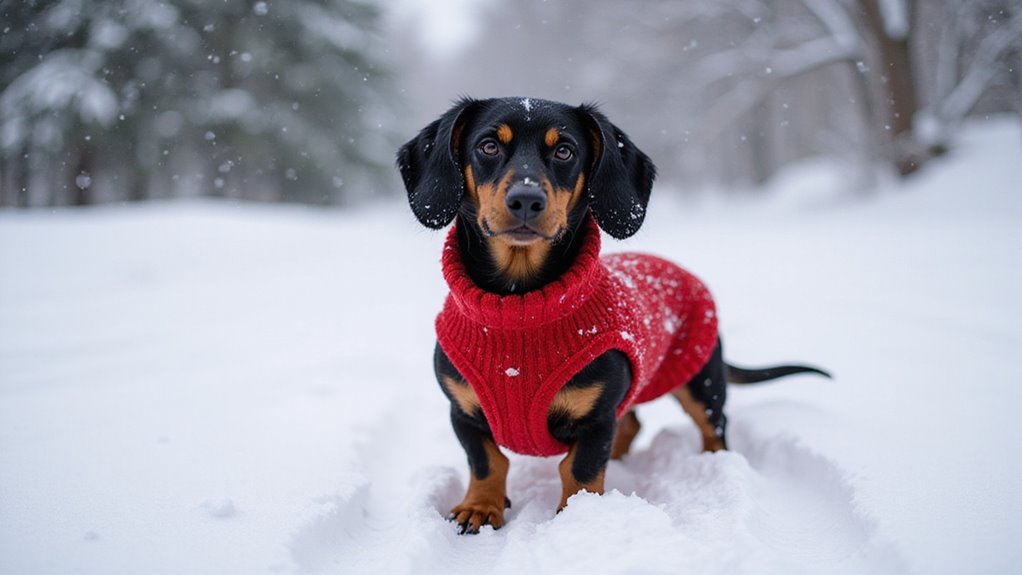
Cold Weather Risks for Dachshunds and How to Protect Them
As a dachshund owner, you know your furry friend has unique needs, especially in cold weather. Their short legs and thin coats make them particularly susceptible to the chill. It’s vital to understand the risks they face and how to protect them effectively. From signs of discomfort to essential winter gear, there’s much to reflect upon to keep your dachshund safe and warm this season. Let’s explore these important aspects together.
The Essentials
- Dachshunds are vulnerable to cold due to their thin coat, short legs, and elongated bodies, leading to rapid heat loss.
- Prolonged exposure can result in frostbite on ears and paws, and hypothermia may occur if they show signs like shivering or lethargy.
- Limit outdoor outings in cold weather to brief periods and ensure they are warmly dressed in stylish, insulated coats.
- Protect their paws with booties to guard against ice, snow, and salt, which can irritate sensitive skin.
- Use reflective harnesses for visibility during darker winter days, enhancing safety while walking in low-light conditions.
Understanding Dachshund Physiology and Cold Sensitivity
While you might adore your Dachshund’s playful nature, it’s essential to understand their unique physiology and how it affects their cold sensitivity. With their short legs and elongated bodies, Dachshunds have a lower surface area-to-volume ratio, making them more susceptible to cold temperatures. Their thin coat lacks sufficient insulation, leading to quick heat loss. Additionally, their small stature means they’re closer to the ground, exposing them to colder surfaces. This combination makes them particularly vulnerable during chilly weather. Recognizing these traits can help you take necessary precautions to keep your furry friend warm and comfortable throughout the colder months. To further ensure their warmth, consider investing in stylish coats that provide adequate insulation against the cold.
Common Cold Weather Risks for Dachshunds
Understanding Dachshund physiology is key to recognizing the common cold weather risks they face. These little dogs have short legs and long bodies, making them more susceptible to cold temperatures. You might notice they struggle with frostbite on their ears and paws, especially if they’re out for too long. Additionally, their thin coats don’t provide much insulation, increasing their risk of hypothermia. Ice and snow can also pose dangers, as they can slip and injure themselves. Be cautious about how long they’re exposed to chilly weather; it’s best to keep their outings brief and warm. Investing in stylish coats can help keep your Dachshund comfortable and protected from the cold.
Signs of Hypothermia in Dachshunds
How can you tell if your Dachshund is suffering from hypothermia? Look for shivering, lethargy, or unusual weakness. If your pup’s body feels cold to the touch or they’re reluctant to move, these are warning signs. You might notice their breathing becoming shallow and rapid, or they may seem confused or disoriented. In severe cases, your Dachshund could even lose consciousness. Pay attention to their behavior and keep an eye on their temperature, which should be around 101 to 102.5°F. If you suspect hypothermia, take immediate action to warm them up and consult your veterinarian for guidance. Additionally, using the right grooming tools, such as the best brush for Dachshunds, can help maintain their coat and overall health during cold weather.
Frostbite: What Every Dachshund Owner Should Know
As temperatures drop, your Dachshund becomes more susceptible to frostbite, a serious condition that can affect their ears, paws, and tail. It occurs when skin and underlying tissues freeze due to prolonged exposure to cold. Watch for signs like pale or gray skin, swelling, or blisters. If you suspect frostbite, warm your pup gradually with a blanket, avoiding direct heat sources. Never rub the affected areas, as this can cause further damage. If you notice severe symptoms, consult your vet immediately. Protecting your furry friend from frostbite is essential during cold months, so stay vigilant and keep them warm. Providing a safe ramp can also help your Dachshund avoid slipping on icy surfaces when they are going in and out of the house.
Essential Winter Gear for Dachshunds
Keeping your Dachshund warm and protected during winter goes beyond just monitoring for frostbite. You’ll want to invest in a quality dog coat that covers their belly and back, providing extra insulation. Consider booties to shield their paws from ice and salt, which can cause irritation. A warm sweater can also help, especially for those with short hair. Don’t forget a snug scarf or neck warmer to protect their throat. Finally, a reflective harness is essential for safety during darker days. With the right winter gear, you can guarantee your Dachshund stays cozy and safe while enjoying the season. Additionally, cozy sweater styles that fit your Dachshund perfectly can add both warmth and style to their winter wardrobe.
Creating a Safe Indoor Environment During Winter
While it’s important to protect your Dachshund from the harsh winter elements outside, creating a safe and cozy indoor environment is equally essential. Start by ensuring your home is warm, with blankets or dog beds in draft-free areas. Keep hazardous items, like holiday decorations and chemicals, out of reach. Consider using pet-safe heaters or heated mats for extra comfort. Provide plenty of toys to keep your pup entertained during indoor playtime. Finally, monitor indoor humidity levels, as dry air can irritate their skin. By following these steps, you’ll create a welcoming space for your Dachshund to thrive during winter. Additionally, investing in a high-quality dog bed will enhance their comfort and support their joints during the colder months.
Tips for Winter Walks With Your Dachshund
When the temperatures drop, taking your Dachshund for walks can be a delightful way to bond, but it’s essential to prepare for the chilly conditions. Dress your pup in a snug, insulated coat to keep them warm, and consider dog booties to protect their paws from ice and salt. Always keep walks short—10 to 15 minutes is often enough. Watch for signs of discomfort, like shivering or lifting paws, and head back inside if needed. Finally, stay visible with reflective gear, as winter days are shorter. Additionally, investing in perfect shoes for your Dachshund’s comfort can provide extra protection and style. Keep your Dachshund safe and cozy while enjoying the winter wonderland together!
Frequently Asked Questions
Can Dachshunds Tolerate Snow, or Should They Avoid It Altogether?
Dachshunds can tolerate snow for short periods, but they shouldn’t be left outside too long. Keep an eye on them to prevent hypothermia and guarantee they’re warm and comfortable when playing in the snow.
How Can I Tell if My Dachshund Is Too Cold Outdoors?
You can tell if your dachshund’s too cold outdoors by watching for shivering, lifting paws off the ground, or reluctance to move. If they seem uncomfortable, it’s best to bring them inside to warm up.
Are Certain Dachshund Breeds More Cold-Sensitive Than Others?
Yes, certain dachshund breeds, like the standard variety, might be more cold-sensitive due to their size and coat type. You’ll want to monitor their comfort closely during chilly weather, regardless of their specific breed.
What Indoor Activities Can Keep My Dachshund Entertained During Winter?
You can keep your dachshund entertained during winter with interactive toys, puzzle games, or hide-and-seek. Short training sessions, indoor fetch, and agility courses also keep them mentally stimulated and physically active while indoors.
Can Dachshunds Develop Allergies From Cold Weather Exposure?
Yes, dachshunds can develop allergies due to cold weather exposure. Symptoms might include itching or skin irritation. It’s essential to keep your pup warm and monitor for any changes in their skin or behavior.


